‘Wild Horse Nine’
Directed by Martin McDonagh (R)
★★★
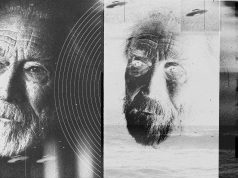
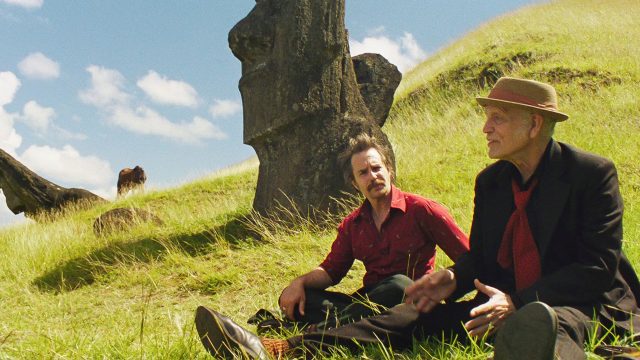
John Malkovich “has made a career out of blending fragility and menace,” and, at 72, he’s landed “the role of his career,” said Bilge Ebiri in NYMag.com. Martin McDonagh’s latest comedy drama casts Malkovich as Chris Carlisle, a dying CIA assassin who in 1973 is visiting Chile’s Easter Island with a protégé, played by Sam Rockwell, who just may kill his mentor before their getaway is over. “A melancholy hangout drama masquerading as a hitman comedy,” Wild Horse Nine is a film built around its lead’s “queasy charisma,” and Malkovich, playing an at once insouciant and rueful agent of U.S. imperialism, “has never been better.” Rockwell’s Lee Chesterfield “isn’t granted the same depth by McDonagh’s script,” said Nick Schager in The Daily Beast. But the younger actor, who won an Oscar for his work in an earlier McDonagh film, is “highly attuned to the rhythms of the filmmaker’s prose,” and “his chemistry with Malkovich is fantastic.”
Unfortunately, Wild Horse Nine fails in its attempts to make a meaningful political point. Both Chris and Lee are operatives sent to Chile to help stage the coup that will topple socialist president Salvador Allende, yet the potential gravity of that storyline is “undercut by the material’s increasingly cartoonish tone.” Still, “the fiendish ingenuity” of the writerdirector’s plotting allows it to finish with “a bloody yet strangely moving climax in which McDonagh continually subverts expectations,” said David Rooney in The Hollywood Reporter. Once again, he’s displayed “a masterful ability to offset corrosive dark comedy with searing poignancy.”
‘Godzilla Minus Zero’
Directed by Takashi Yamazaki (R)
★★★
The sequel to 2023’s acclaimed Godzilla Minus One “falls into the same trap that every sequel to a solemn Godzilla movie fell into before,” said William Bibbiani in The Wrap. While this latest Japanese import rates as “a great Godzilla sequel, maybe even one of the best,” it’s “not one of the greatest Godzilla movies.” And the reason is that the monster serves well enough as a metaphor for nuclear warfare when he’s wreaking havoc alone but becomes nearly impossible to take seriously when he’s “wrasslin’ another beastie.” In Minus Zero, 1949 Japan is still recovering from the devastation of war and Godzilla’s attacks when a rival, the dragon-like Ghidorah, strikes, prompting some of the human heroes of the previous film to mount a response that eventually brings in a revived Godzilla.
Though “much of Minus Zero feels like a rehash,” said Clint Worthington in RogerEbert.com, the sequel earns its R rating in the way director Takashi Yamazaki lingers over charred and maimed bodies, underlining his commitment to making no-nonsense monster films that once again invoke the anxieties of postwar Japan. Yamazaki goes further, said Owen Gleiberman in Variety. Before his revival of the franchise, “when did anyone ever talk about performances in a Godzilla movie?” — yet he and his actors make us care about each of the central human characters. Better still, when the climax arrives, Yamazaki delivers “a clash of the titans that will reduce everyone in the audience to a wide-eyed, jaw-dropped child.”
A CIA black comedy and a return of an iconic lizard