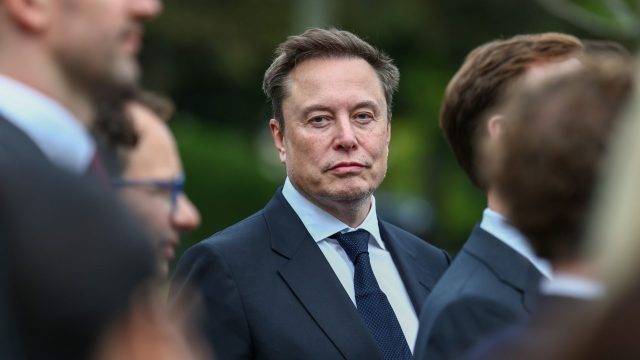
American politics has never had to deal with someone like Elon Musk before, said Andrew Egger on The Bulwark. There are other wealthy donors, of course, but none comparable to the world’s richest man.
Musk lavished about $450 million on Republican campaigns ahead of this week’s midterm elections – more than any single donor has ever spent on a US election cycle. Around $180 million of that went on unsuccessfully trying to stop the Democrat James Talarico winning the Texas Senate race. And Musk wasn’t just writing cheques. On his platform X, where “he has 241 million followers and owns the algorithms that ensure everyone sees his posts”, he relentlessly tweeted attacks on Talarico, calling him a creep who “will vote to take away your children and transition them”.
Musk’s efforts to swing the outcome may have failed, but they raised questions about his degree of influence, and put him in the Democrats’ sights, said Paul Blumenthal on HuffPost. Kendall Scudder, chair of the Texas Democratic Party, declared: “If you think retribution isn’t on the way, you’re mistaken.”
‘Berserk’ hatred
The Left has “gone nearly berserk” in its hatred of Musk, said Victor Davis Hanson on American Greatness. Back in the days when he supported the Democrats (Musk voted for Hillary Clinton in 2016 and claimed he voted for Joe Biden in 2020), liberals loved him and proudly drove Teslas. But now that he votes Republican, he’s a Nazi who’s out to buy elections. Never mind that the billionaire George Soros and his foundations “have channelled well over half a billion dollars to left-wing candidates and causes in just the last six years alone”.
Democrats are itching to launch investigations into Musk, said Robby Soave in Reason. And some are now even talking of nationalising his companies, including Starlink, claiming that they’re too important to be left under his control. This is a “dangerous” notion. It would unfairly target Musk and send a message to other innovators that they’d better not be too successful or they’ll be punished.
Critics must keep their vengeful feelings in check, agreed Marian L. Tupy on The Dispatch. While Musk should of course be held accountable for any violations of the law or any harms caused by his decisions, opponents shouldn’t turn political disagreement into a reason to “obstruct legitimate enterprise”. Musk can be arrogant, vindictive and rude, but his “failings should be weighed against his contributions to human progress”.
Oligarchy vs. democracy
If Musk stuck to technology, his “capricious, emotionally stunted man-baby” antics might not matter, said David Futrelle in The National. But he’s a political force: apparently willing to switch off Starlink with shocking effects on Ukraine; increasingly sceptical of democracy and willing to leverage his immense wealth to undermine it.
The sums he’s spending to tilt elections are unprecedented, and he seems to believe his wealth puts him above the law. When the tech journalist Kara Swisher predicted in a recent podcast that the Democrats would soon be investigating Musk over his huge government contracts and his leadership of the job-slashing Doge agency, he reacted furiously. “Live by the sword, die by the sword,” he posted on X. “Sounds like Swisher really wants to go to prison.”
The good news is that Musk’s money couldn’t buy the Texas Senate seat, said Tim Murphy in Mother Jones – in part because Talarico’s campaign “was predicated on the idea that people like Musk would try to buy the seat”. Even so, this is a warning, said Perry Bacon in The New Republic. Democrats must restrict the vast and growing political power of billionaires, including liberal ones. “America can have an oligarchy or a democracy – not both.”
Tesla and SpaceX CEO has brought money into politics on a previously unthinkable scale – but his actual influence is debatable