
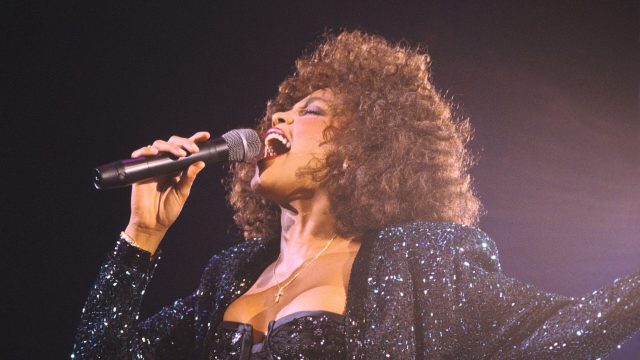
Whitney Houston was a cultural icon who sold more than 200 million records.
Yet her achievements “were, and remain, obscured by public interest in her private life: her sexuality, her relationships, her relationship with drugs”, which ultimately contributed to her untimely death in 2012 at the age of just 48, said Liam Kelly in The Telegraph.
This, in part, is what makes her such a “compelling character” for Emily Lordi’s new biography, “Holding Lightning: the Life, Loves and Art of Whitney Houston”.
The version of Houston’s story that has played out time and again in the many books and documentaries produced since her death is of the “wholesome choirgirl” destroyed by her marriage to bad boy singer Bobby Brown in 1992, said The Times’ Victoria Segal. The tale is one of a “sparkling pop princess sliding catastrophically off the rails and into the drug abuse that claimed her health, her voice and, ultimately, her life”.
Refusing to “reduce Houston’s story to another ‘good girl gone bad’ narrative”, Lordi, a critic and professor of English at Vanderbilt University, instead “presents a pluralistic take on her life” in which the singer’s “queerness, drug use and eccentricities are not dismissed as aberrations (as they were in her lifetime) but rather seen in the wider context of her unique talent and the pressures placed on her to embody Black excellence”, said Priya Elan in The Guardian.
Going even further, Lordi “repeatedly and persuasively” makes the case that while she almost never wrote her own material, Houston was an artistic “genius”, said The New York Times culture editor Leah Greenblatt.
While Lordi’s analysis can “tip into academic mode, and she sometimes overreaches in her attempt to make the singer all things to all people”, the book “works eloquently to elevate and re-reframe an icon, and in its best moments also allows her the grace of something she longed for and rarely got to be: life-size”.
Emily Lordi’s book refuses to reduce the singer’s story to the usual ‘good girl gone bad’ narrative