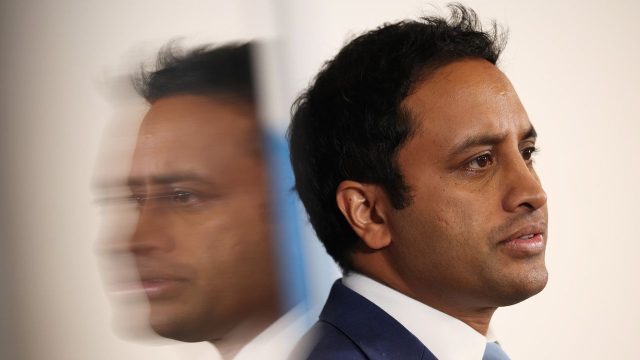
“Zia Yusuf is a brilliant man, and he’s a genius actually, and he’s an incredible communicator,” Tory defector and Reform member Nadine Dorries told Times Radio recently. But, she added: “I wish he closed down his Twitter account.”
The interview followed a tweet by Reform’s self-styled “shadow home secretary” in response to reports that Somali-born Sagal Abdi-Wali, the leader of Camden Council, was the favourite to be Labour’s candidate to replace Keir Starmer in the Holborn and St Pancras by-election. Yusuf asked his followers: “Do you understand what’s happening?”, a remark that drew condemnation from across the political spectrum for its apparent racial undertones.
‘Remarkable and rare gifts’
“Even in these polarised times”, it is hard to imagine another politician as “unlikeable”, “rebarbative” and downright “sneery” as Yusuf, said Sean O’Grady in The Independent. I can’t help feeling that “every time he appears in the media or tweets a controversial opinion, he shaves another slice off Reform UK’s increasingly fragile poll ratings”.
Take, for example, his decision to call former defence secretary Ben Wallace, a former Scots Guards officer who served in Northern Ireland during the Troubles, a “traitor”. Just for good measure, he then added a poll asking if Wallace should be prosecuted for treason.
That episode earned Yusuf a “ticking off” from Nigel Farage, but “the more one sees and hears from Yusuf, the more obvious it becomes that he is a liability for Reform”, said Stephen Pollard in The Spectator.
The son of Sri Lankan immigrants, Yusuf built a hugely successful business career and is clearly “a man of remarkable and rare gifts”. But he is also “the latest example of the truism that business success is no indicator of political acumen, let alone political success”.
‘Ticking timebomb’
Whether Yusuf is or is not a nice person, “behaving as he does is entirely politically rational”, said Daniel Finkelstein in The Times. In labelling former Army officers traitors or arguing those not born in Britain shouldn’t be able to stand for Parliament, Yusuf is signalling “an assault on established institutions” and conventions. “The very fact that this alienates people unnecessarily makes his signal – that with him there is no compromise or messing about – more reliable.”
This has also endeared Yusuf to rank-and-file Reform members. A poll conducted in June found that 22% of those asked would opt for him as leader in a contest to replace Farage, ahead of current deputy Richard Tice, party chairman Lee Anderson and Reform’s “shadow chancellor” Robert Jenrick, said the Daily Express.
Politically this makes sense, said UnHerd. Having seemingly failed to absorb and replace the Conservative Party, Reform is “reasserting itself as an unambiguously populist party. All it needs now is an unambiguously populist leader.”
Senior figures within the party are forming what they call an “Anyone but Zia” group to try to prevent him from succeeding Farage, should he step down, said The Observer . “They all know [Yusuf’s] a problem, but he is popular among the grassroots,” one critic told the newspaper. “He’s a slowly ticking timebomb.”
Self-styled ‘shadow home secretary’ is a ‘slowly ticking timebomb’ who could scupper his party’s chance of power, say critics