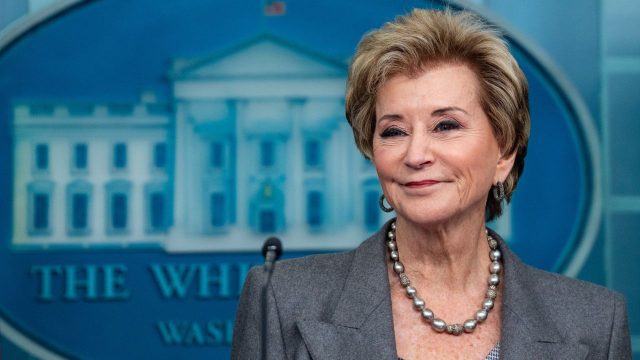
President Donald Trump’s campaign promise to dismantle the Department of Education took a major step forward this month after the White House reassigned the agency’s special education and civil rights programs to other federal agencies. The Trump administration says the adjustments will maximize efficiency by pairing programs with the departments best suited for their execution. Critics, however, claim the reassignments are an illegal effort to circumvent congressional funding challenges and say they will harm America’s children and the country’s educational prospects.
What did the commentators say?
At the center of this latest episode is the Education Department’s Office of Special Education and Rehabilitative Services, which protects the “rights of children with disabilities,” and its Office for Civil Rights, which works with students who “experience discrimination based on race, sex or religion,” said The Associated Press. Those offices will now be operationally reassigned to the Department of Health and Human Services and the Justice Department, respectively.
Shifting the programs is “among some of the most high-stakes moves the Trump administration has made to end the agency,” said Politico. More than 100 of the Education Department’s programs and offices are “already relocating to five agencies — Interior, Labor, State, Treasury and Health and Human Services,” said Education Week. This spring, the Education Department also announced plans to “leave its Lyndon B. Johnson headquarters” and “turn the space over to the Energy Department,” said The Washington Post.
This latest change comes as “both Republicans and Democrats in Congress have raised concerns” with Education Secretary Linda McMahon over a “growing backlog of civil rights complaints in schools,” said The New York Times. Last month, the secretary told lawmakers she “wanted to hire more civil rights lawyers” for her department “despite a budget request from the White House to reduce funding for that office.”
By relocating the department’s programming now, critics say the White House is “weakening oversight after already drastically reducing staffing” in the affected offices, said the Times. McMahon has said that using interagency agreements will “help build the case for skeptical lawmakers” to “support abolishing the Department of Education as an independent agency” at large, said Education Week. But lawmakers “across both parties” seem “reluctant to affirmatively endorse this plan.”
“The irony here is that every action” the Department of Education claims will “reduce fraud, waste and abuse” ultimately creates “more chaos and confusion,” said former Office of Civil Rights attorney Beth Gellman-Beer to Inside Higher Ed. “No one understands how this is going to operationalize.” Ultimately, the shift could “make interagency coordination involving education programs more difficult,” said The 19th.
For instance, The 19th said, approximately “12% of students with disabilities are English learners” with about half attending Title I schools “serving economically disadvantaged children.” Rather than operating within a single department as they had in the past, the associated programs will henceforth be administered by “various federal agencies” across multiple departments.
What next?
Per the text of the agreement between the Departments of Education and Health and Human Services obtained by National Public Radio, the latter “would do much of the work of administering formula grant programs” mandated under the Individuals with Disabilities Education Act, said NPR’s “All Things Considered.” The Department of Education would provide “management and leadership,” as required by law. The plan is “likely to garner some pushback” from legislators, “including among Republican lawmakers” who want to ensure the government meets its “legal obligations to students with disabilities,” said Politico.
The Education Department’s Office of Civil Rights will similarly “refer cases to the Department of Justice for evaluation and resolution” but will “continue to decide whether to pursue administrative enforcement action,” said Education Week. Legally, however, the agency’s Office of Civil Rights is “mandated to evaluate every complaint they receive,” while the Justice Department’s Civil Rights Division “can pick and choose which complaints it pursues,” said Inside Higher Ed. Critics fear “this partnership could lead the Office of Civil Rights to become more like the DOJ” by “picking and choosing which cases it will address based on political priorities.”
A new push attempts to reallocate educational programs across the government