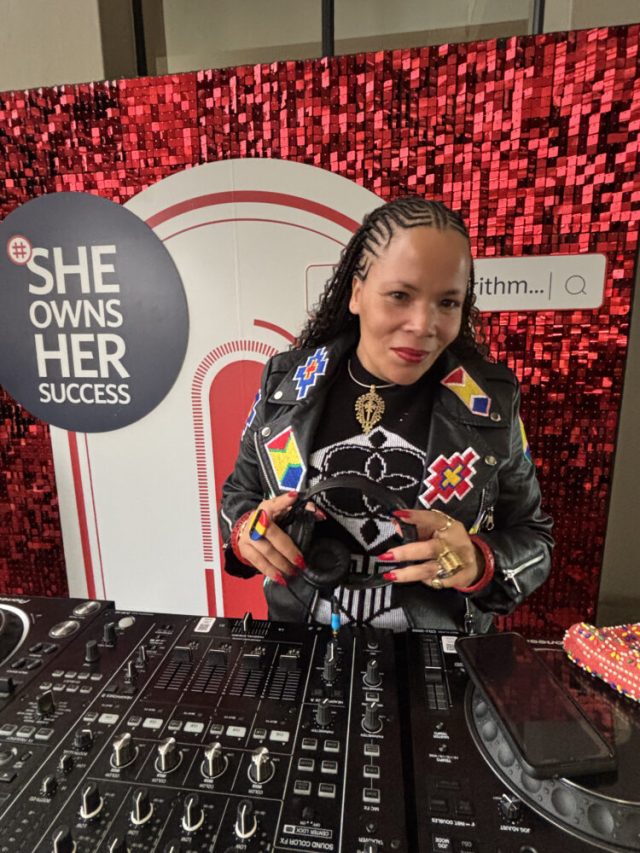
In true Maria McCloy style, to get to her send-off meant tracing the city she loved so fiercely. Johannesburg did not simply mourn her; it moved for her.
Cars lined up outside The Parktonian Hotel before people made the familiar walk toward the Joburg Theatre. No one needed directions. You simply followed the procession of style. The women in sculptural jewellery. The below the knee skirts. The leather jackets. The knitwear. The famous Mother & Child T-shirts McCloy made iconic.
Even in death, Maria had styled the room.
But inside the theatre, beneath all the texture and glamour, the mood shifted. Johannesburg — usually loud and restless, was quiet. Friends held onto each other. People cried before the programme even began. The city that Maria documented, stitched together and amplified suddenly felt smaller without her in it.
I walked in as journalist and longtime friend Niren Tolsi approached the podium. He immediately captured what so many had struggled to articulate since her death: how impossible it felt to write or speak about Maria McCloy in the past tense.
“It’s been eight days since Maria died,” he said, pausing often to gather himself. “And like all of us gathered here, I still do not know how we manage to face each day without her.”
Tolsi described the everyday intimacy of their friendship: the WhatsApp voice notes, the gossip delivered with razor-sharp political analysis, the messages about celebrity culture and corruption, the side-eyes and laughter that became their own language.
“How will I survive without our conversations?” he asked. “Without that McCloy side-eye snort and giggle signalling I was being suitably scandalous?”
The theatre laughed softly through tears because everyone there knew exactly what he meant. McCloy’s friendships were immersive. She was not halfway with people. She was entirely there.
Tolsi spoke of how McCloy loved Johannesburg with a rare and radical attentiveness. “She walked through Joburg layering observations and documentation,” he said.
“She understood and re-stitched the fabric of this city through politics, aesthetics and a love for culture, cloth and accessories.”
It was perhaps the clearest description of what McCloy represented to post-apartheid urban culture. She was not merely adjacent to culture; she helped shape the lens through which Black South Africans saw themselves after 1994.
Tolsi recalled meeting McCloy at Rhodes University. They were among only a handful of Black students in their journalism classes, navigating an institution still deeply colonial in character.
“We formed hard exoskeletons to preserve our Blackness,” he said.
Even then, Maria’s politics was already formed. She challenged rape culture, advocated for survivors and spoke openly against abusive men long before it became socially acceptable to do so in creative circles. She was also speaking about decolonisation decades before movements like #RhodesMustFall emerged nationally.
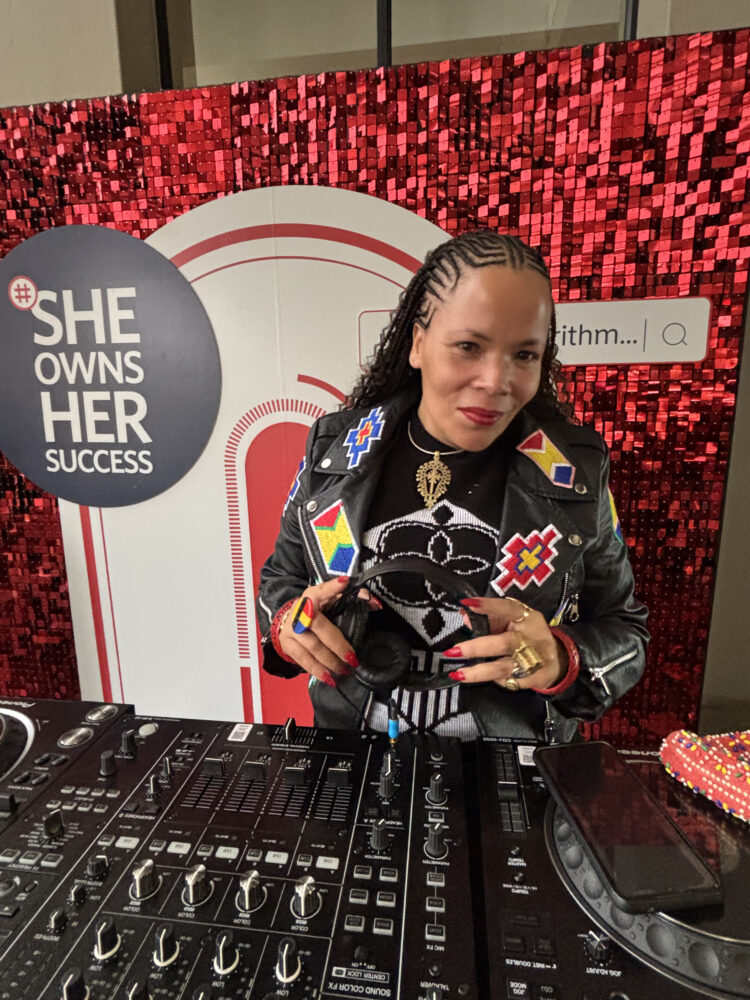
“She was never porous in her principles,” Tolsi said. “If she knew someone had been violent towards women, she made it clear where she stood.”
Their friendship stretched from student politics to Johannesburg’s cultural boom years in Yeoville during the late 1990s. Tolsi remembered parties at Westminster Mansions where artists, musicians, journalists and future cultural leaders gathered around McCloy’s orbit.
“At some point I walked downstairs and found Brenda Fassie shouting into the intercom trying to get into the building,” he laughed. “Maria is the coolest person I know, I thought to myself.’”
That coolness would become part of her mythology but Tolsi resisted reducing her to aesthetics alone. “People talk about her fashion and DJing and publicity work,” he said.
“But what I want to underline is that she shaped post-apartheid South Africa. She reshaped how we understood ourselves, how we danced, how we dressed, how we played.”
Writer and filmmaker Milisuthando Bongela followed with a tribute that was both devastating and funny, much like the friendship she described.
Bongela spoke about meeting McCloy in 2008 after moving to Johannesburg broke, uncertain and searching for direction.
“One day she saw me at a party and said, ‘What’s going on with you? You’ve lost your light’,” Bongela recalled.
When Bongela admitted she needed work, McCloy casually told her to come to the office in January. “I don’t even think they had a position for me,” she laughed. “I feel like they made one up on the spot.”
That was McCloy’s way. She made plans for people. She connected them. She held them up. Bongela also painted a vivid portrait of life at Westminster Mansions in Yeoville, where McCloy’s apartment became the emotional centre of an entire community.
“Her home was the literal middle centre of the building,” she said. “The beautiful beating heart of our community.”
Westminster was more than an apartment block; it was an ecosystem of artists, journalists, musicians and wanderers.
McCloy knew everybody. She introduced neighbours to each other. She hosted legendary January parties where one could encounter an ex-lover, a future employer, a famous poet, a sangoma or a lifelong friend all in the same night, Bongela said.
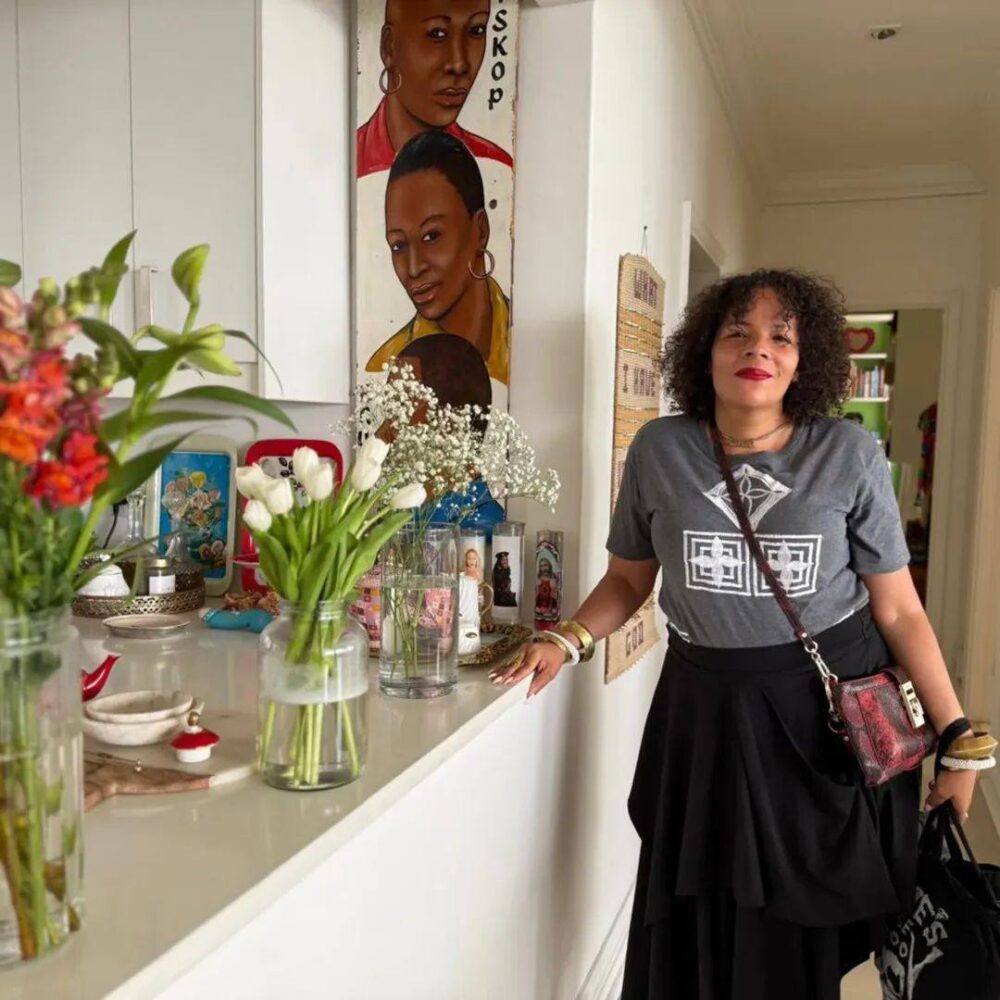
“Everything somehow passed through this butterfly,” Bongela said. “Because Maria was the nosiest person I ever met.”
Again, the theatre burst into laughter.
Bongela remembered how Maria never cooked, how her apartment smelled of incense instead of onions, how takeaway biryani and bottles of wine often stood in for domesticity. Yet somehow her home still radiated warmth.
“She gave people time,” Bongela said. “She gave us herself.”
The most striking part of Bongela’s tribute was her reflection on McCloy’s emotional generosity. Even after arguments, even after distance, she remained present.
“Ten years ago we stopped speaking for a few months,” she admitted. “Then in the middle of a feud she asked me for a lift home. I thought, ‘But we’re fighting.’ But I couldn’t say no. That was the end of the dispute. Never to be discussed again.”
Then came Dzino, co-founder of Black Rage Productions alongside McCloy and Kutloano Skosana. Through tears, Dzino spoke about the ambition they shared as young Black creatives in the 1990s.
“We wanted to create something like Drum magazine for our generation,” he said. “There was no media covering Black urban culture properly.”
Out of that vision came Black Rage Productions, which helped redefine South African television, publishing and music journalism in the democratic era. “Maria was at the centre of that universe for us,” he said. “She was the energy, the style, the taste, the instinct.”
He laughed remembering how she refused to fully digitise her business despite growing international demand for her accessories.
“I told her to set up a website,” he said. “But now I understand why she didn’t listen to me. Maria loved talking to customers. She wanted connection.”
It became a recurring theme throughout the memorial: McCloy as connector. McCloy as archivist of people. McCloy as emotional infrastructure.
And then, finally, there was Thandiswa Mazwai. She did not give a speech. She simply stood before the audience and sang Throw It Away by Abbey Lincoln.
The room broke open.
Mazwai’s voice carried what language no longer could. By then, everyone understood that this memorial was not merely about mourning a public figure.
It was about mourning someone who made Johannesburg feel possible. Someone who gathered people across class, art, music, fashion and politics and convinced them that beauty, style and radical care belonged together.
Outside, the city continued moving. Taxis hooted. Traffic thickened. Street vendors packed up for the evening. Johannesburg remained itself.
But for a few hours inside the Joburg Theatre, the city stopped to honour one of its greatest architects.
Friends, creatives and a city in mourning gathered to celebrate the woman who helped shape how Johannesburg saw itself after 1994.