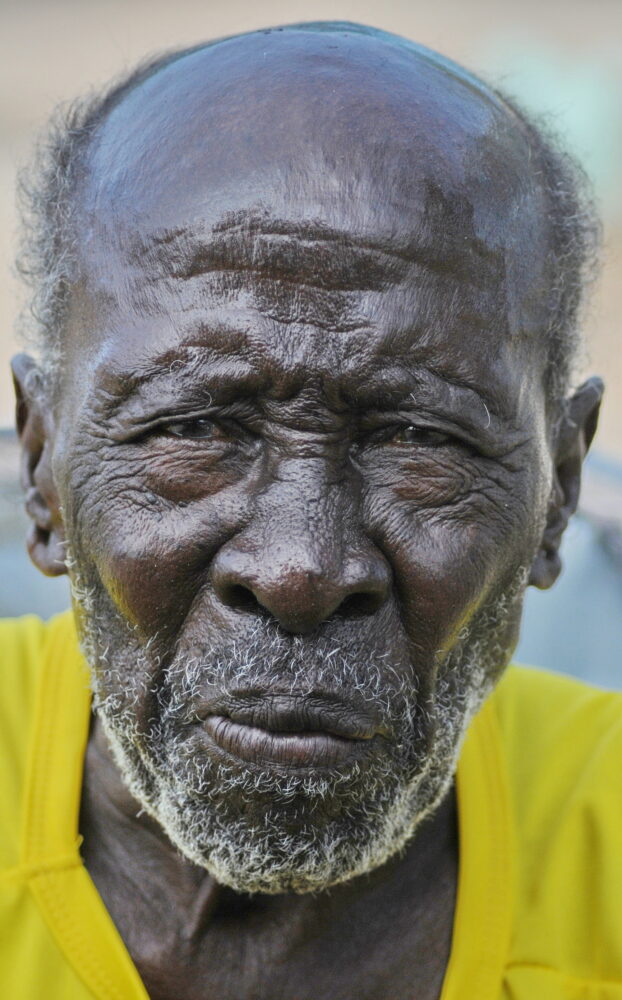
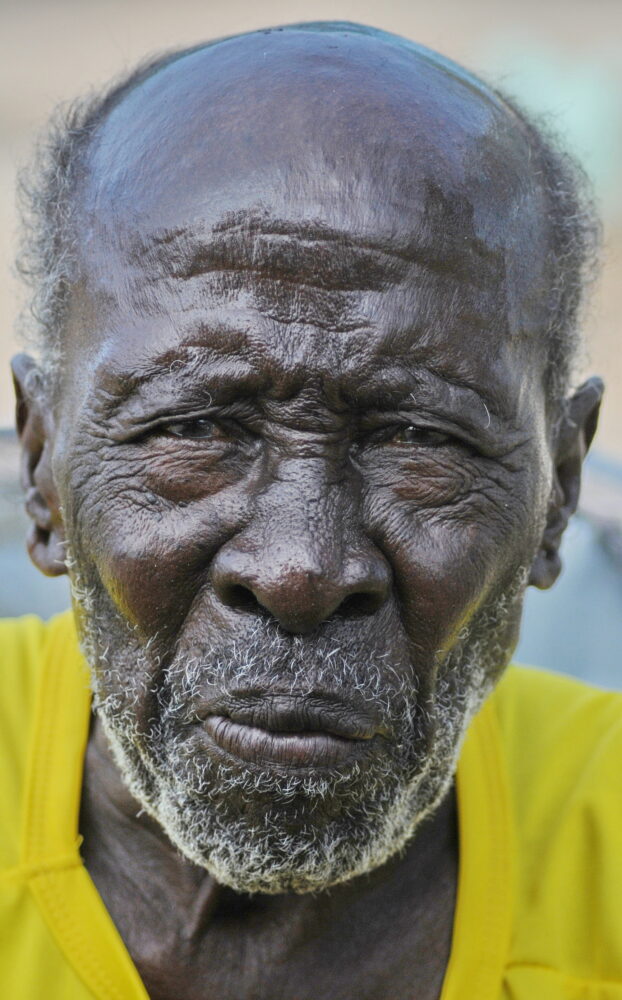
Elder citizen Spokes Sithole, who was instrumental in securing the historic R1 billion Mala Mala land claim settlement, went to his grave with a broken heart last week. He was 108.
Tatana Spokes, who was born in 1918 — the same year as Nelson Mandela — was among the last remaining elders who helped the N’wandlamwahri community successfully claim their ancestral land through the land restitution process.
Well into his 80s, he defied old age, aching limbs and a fading memory to help the community through the stringent verification process of the Commission for Restitution of Land Rights.
Without any formal education, he relied on the power of memory, pointing out significant landmarks, including graves and sites where homesteads and cattle kraals once stood before the community was evicted from their land in the 1950s.
He also spent hours and days testifying and being cross-examined by hardened lawyers in the Land Claims Court as the community fought for the restoration of their land rights.
Sithole was born on land that forms parts of the luxury Mala Mala and Sabi Sands game reserves, where a night’s stay can cost up to R35 000 a person.
In his lifetime, working as a chef and labourer at Londolozi Game Reserve, Sithole never saw that kind of money and spent much of his life living hand to mouth after the destruction of the community’s self-sustaining agrarian economy.
On 9 January 2014, Sithole was among the throngs of people who gathered in a field in Lilydale village in Mpumalanga, to witness then-president Jacob Zuma preside over the ceremonial handover of land back to the N’wandlamhari Communal Property Association (NCPA).
“May you enjoy much prosperity and success from this powerful resource and may you ensure that it remains productive,” Zuma told the community.
However, Sithole and many of the claimants lamented that success and prosperity resulting from the deal remained a pipe dream. Although the land remains productive, operating as the Mala Mala Game Reserve, the settlement has been beset by mounting problems that has seen few reap the rewards of the deal.
This has resulted in endless court battles pitting different factions from the NCPA, which was elected as custodians of the land deal settlement, against one another.
Under the settlement, community members are set to benefit from a share scheme, education and empowerment bursaries. But squabbles about the veracity of beneficiaries and mismanagement of the NCPA have put paid to the dreams.
The NCPA, which is at the centre of a battle for control among various parties, is beset by accusations and allegations of corruption by the executive, amounting to millions of rand, nepotism, a lack of transparency and accountability to its members. It is also accused of failing to hold annual general meetings and elections in line with legislation.
Communal property associations (CPAs) are entities set up to manage land on behalf of beneficiaries of land restitution and reform communities. They are required, under sections of the Communal Properties Act 28 of 1996, to hold at least one general meeting, compile annual financial statements, report on land transactions, update membership every year and submit their annual report to the director-general of the department of agriculture, land reform and rural development.
In its 2023/24 annual report, the department notes that there were 1 742 registered CPAs nationally. However, “during the 2022/23 reporting period, 75% of the registered CPAs were non-compliant with the provisions of Section 11 and Regulation 8 of the Act, even though some were functional during this period, 82% were non-compliant”.
The NCPA, which has 1 439 members, has not held a general meeting since 2013 and has been flagged among the more than 1 300 non-compliant CPAs.
The Mala Mala land claim, with a settlement amount of R939 360 00, remains by far one of the most significant settlements since the passing of the Restitution of Land Rights Act 22 of 1994.
The community lodged claims against 21 properties, consisting of 63 portions, adding up to 65 000 hectares in total. Most of the land included the elite, internationally renowned, privately owned luxury Mala Mala Game Reserve, which lies in the Kruger National Park.
Five farms, consisting of nine portions and totalling 13 184ha were restored to the community. The claims were lodged by the Mavuraka and Mhlanganisweni communities. But these were later consolidated into a single claim, a newly constituted body, the N’wandlamwahri CPA.
This was done in the hope of uniting the two communities that were separated by a river before the land dispossession. But it has had the opposite effect.
The merging of the claims and creation of the NCPA has been identified as one of the main sources of the disagreements, with members from both communities pointing accusing fingers of exclusion and favouritism at each other.
The promise of a better life brought by financial rewards from the share ownership scheme has remained a distant dream for beneficiaries like Sithole, who continued to live in poverty until his death.
When I last visited him for an interview at his home in Huntingdon, on the edges of the Mala Mala Game Reserve in November, he was sickly, depressed and losing hope.
He spoke of his doubts about ever seeing the dispute resolved in his lifetime, resigned to the fact that his time was running out.
His home lies on the boundary of the Sabi Sands and Mala Mala game reserves, where guests indulge in luxury. For Sithole, his family and many other beneficiaries of the land claim, that world remained a distant dream. He lived in a derelict home with his wife, grandchildren and great-grandchildren who were all dependent on the couple’s meagre state old age pensions.
He mentioned that he had received only a single cash payout from the share scheme, with nothing thereafter. Allegations persist that executives of the NCPA have channelled millions of rand — meant for beneficiaries — to their cronies and into their own pockets.
Sithole had hoped the restoration of his and his community’s land rights would restore their dignity and improve their standard of living. Instead, the deplorable conditions in which he lived told a bleak story of gnawing poverty and indignity.
In October last year, Minister of Agriculture, Land Reform and Rural Development Mzwanele Nyhontso convened a meeting of all stakeholders in the land claim in yet another bid to resolve the challenges afflicting the NCPA.
Two previous ministers, Gugile Nkwinti and Thoko Didiza, have also walked the same path but failed to make progress.
Sithole could not attend the meeting due to ill-health and the ravages of old age.
He spent his days sitting in the shade on a camping chair, nursing swollen feet and thinking of the dream deferred.
In January 2020, one of Sithole’s comrades in the land claim, Ringanyiso Simon Marimane, died at his home in Ottawa village, also along the border with the Kruger National Park and Mala Mala.

He was 97. He, too, had played a key role in the verification of the land claim. One of his sons, Oscar Marimane, said his father had died heartbroken. The saga of the battles within the NCPA had weighed heavily on him.
Sithole and Marimane represent a generation that lived through the dark period of land dispossession and experienced the lasting effects of poverty and landlessness. They lived long enough to see the end of legislated apartheid and the restoration of their land rights under the democratic state.
But as South Africa celebrates Freedom Day on Monday, the fruit of freedom remains bitter for thousands like them.
It’s turned out to be sour and unpalatable, courtesy of the politics of dysfunctional CPAs that have been hijacked by self-serving thugs, assisted by cunning and self-serving, politically connected crooks.
The crumbling CPAs, represent the shattered dreams of many, like the two elders.
If no drastic action, like a Madlanga commission-style inquiry into land claims is implemented soon, many more will go to their graves bitter and poor like Sithole and Marimane.
Rest in peace, Tatana Spokes.
Lucas Ledwaba is the author of A Desire to Return to The Ruins — a look at the contentious issues of land reform and restitution in post-apartheid South Africa.
The death of Spokes Sithole at 108 exposes the broken promise of one of South Africa’s largest land restitution settlements, where freedom and land ownership have not translated into lasting prosperity for many beneficiaries