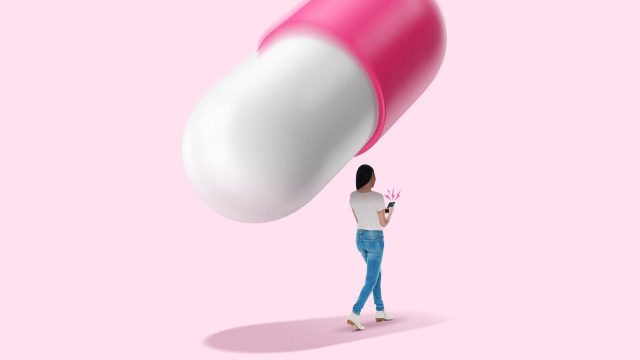
More than a quarter of women under 25 hold a negative view of men, according to a recent poll for The New Statesmen, revealing what the magazine calls a “new radicalism”. This is seen as a challenge to the “prevailing narrative” that it is radicalised young men who are driving the so-called gender wars.
A “growing army” of female influencers broadly referred to as the femosphere is “urging” women to adopt a more cynical mindset when it comes to the opposite sex, “ditch their romantic delusions” and “be more aggressive in the dating game”, said Sarah Ditum in The Times.
What is the femosphere?
The term comes from the concept of the manosphere – a loose, online-based community of social media accounts, forums, blogs and podcasts that promote a view of “traditional masculinity”, with men in a dominant role and women subservient. “United in a belief that men are victims in a society that is designed for the benefit of women”, many of these spaces are “overflowing with rage”, said James Bloodworth in The Times.
The femosphere, which takes up a “quarter of the internet”, is a reaction to this with a message that “men are inherently selfish” and “only interested in one thing”, said Ditum. Manosphere terminology is gender-flipped: instead of “taking the red pill” (embracing the belief that society does not value men), the “pink-pill philosophy” encourages women to break with the egalitarian conventions of liberal feminism and see men as the “problem sex”.
What does that mean in practice?
Femosphere philosophy urges women to avoid casual relationships with men and to “adopt a more emotionally distant, calculated approach” to dating, said NBC News. Some of its content “frames” relationships as something to “win,” and advises followers to be “selective, guarded, and, at times, intentionally aloof”.
Mirroring the “pick-up artists” of the manosphere – those who offer manipulative strategies to persuade women to engage in sexual relationships – the femosphere has its “female dating strategists”, said The Guardian. Among them are the so-called “dark feminine” influencers who “encourage women to find men to support them financially” by cynically deploying behaviours associated with traditional femininity.
The appeal is understandable, feminist theorist Dr Sophie Lewis told the newspaper. The promise of liberal feminism that women could “have it all” has left many “saddled with both productive and reproductive labour”. The femosphere offers liberation from the “double shift”.
Is it a bad thing?
Femosphere influencers claim the movement is about “empowerment” of women rather than hatred of men, said NBC News. They see themselves as “pushing back against dating norms that have historically disadvantaged women” with a mindset that “encourages self-worth, boundaries, and higher standards in relationships”. But critics say it risks “turning dating into a transactional or manipulative experience”, where “authenticity” takes a “back seat to strategy”.
The “overarching belief” of the femosphere is the same as that of the manosphere, said The Guardian: “life is about survival of the fittest”. Men “will always hurt women and that will never change”, so “strategies are needed to conquer the opposite gender”.
A growing number of influencers are encouraging women to ditch the egalitarian narrative of liberal feminism and take a more cynical approach to the opposite sex