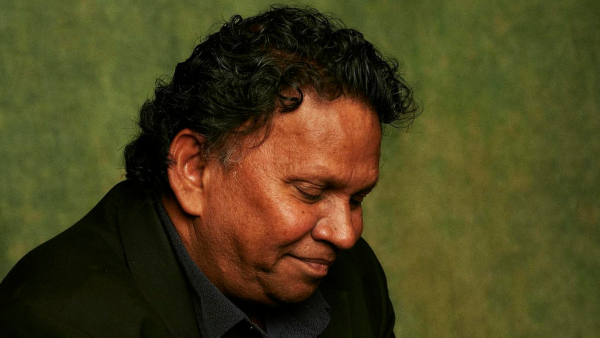
The full title of this article by Marianne Sunshine (The British Blacklist) is “Out of The Caribbean: Guyanese novelist and scholar David Dabydeen nominated for 2026 Nobel Prize in Literature.” Sunshine explains that “the Guyanese author’s work shines a spotlight on Caribbean literary traditions and global history.” [Many thanks to Peter Jordens for bringing this item to our attention.]
The nomination of Guyanese novelist and scholar David Dabydeen for the 2026 Nobel Prize in Literature has drawn rare global attention to the literary traditions of Guyana and the wider Caribbean. For a region that has produced remarkable writers but often struggles for sustained international recognition, the nomination represents a significant cultural moment.
Dabydeen, born in Berbice in 1955 and raised in the historic town of New Amsterdam, is one of the Caribbean’s most respected literary voices. His work, spanning novels, poetry and essays, has consistently explored the legacies of slavery, colonialism and migration that shaped Caribbean modern societies. European and Chinese scholars formally submitted his nomination for the 2026 Nobel Prize, bringing his decades-long contribution to world literature into the international spotlight.
The recognition is particularly meaningful for Guyana, a South American nation culturally rooted in the Caribbean. Speaking after the announcement, Dabydeen noted his pride in representing his homeland, observing that it is rare for a writer from such a unique country to be nominated for the prestigious award.
Dabydeen’s literary career began with poetry. His groundbreaking collection Slave Song, published in the 1980s, used Guyanese Creole to dramatise the voices of enslaved Africans and their descendants. The work earned the Commonwealth Poetry Prize, establishing him early as a writer willing to experiment beyond the English language while confronting the brutal histories of the Atlantic world.
Over the years, he expanded into fiction and criticism. His novels, such as The Intended and Turner, blend historical research with imaginative storytelling, often examining the relationship between Britain and its former colonies. The British painter J. M. W. Turner, for example, becomes a lens through which Dabydeen reflects on empire, art and the transatlantic slave trade.
Beyond his creative writing, Dabydeen has built an influential academic career. After leaving Guyana as a teenager to study in Britain, he attended University of Cambridge, where he studied English at Selwyn College in the 1970s. He later held senior posts at the University of Warwick, helping to shape scholarship on post-colonial literature and Caribbean cultural history.
His public service has also been notable. From 1997 to 2010, Dabydeen served as Guyana’s Ambassador to UNESCO, advocating for cultural heritage and education on the global stage. Through diplomacy, academia and literature, he has remained deeply connected to his homeland, often returning to Guyana and grounding his writing in its landscapes and history. [. . .]
For full article, see https://thebritishblacklist.co.uk/out-of-the-caribbean-guyanese-novelist-and-scholar-david-dabydeen-nominated-for-2026-nobel-prize-in-literature
Also see https://www.sel.cam.ac.uk/news/nobel-prize-nomination and https://www.stabroeknews.com/2025/12/28/sunday/guyanese-david-dabydeen-nominated-for-2026-nobel-prize-in-literature
The full title of this article by Marianne Sunshine (The British Blacklist) is “Out of The Caribbean: Guyanese novelist and scholar David Dabydeen nominated for 2026 Nobel Prize in Literature.” Sunshine explains that “the Guyanese author’s work shines a spotlight on Caribbean literary traditions and global history.” [Many thanks to Peter Jordens for bringing this