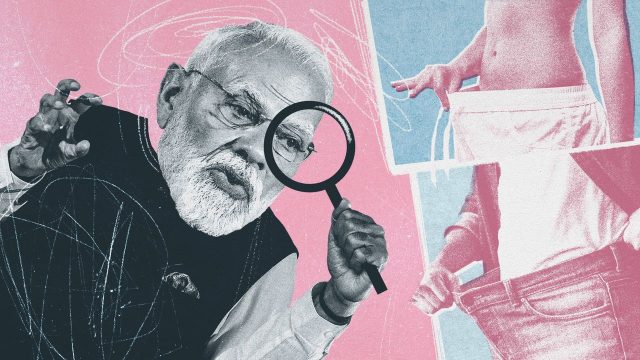
India has long recognised a “third gender” and was one of the first countries to allow people legally to self-identify as transgender. But its parliament has just passed controversial amendments to such laws, which remove the right to self-identification and narrow the definition of ‘transgender’.
The Bharatiya Janata Party-led government got the bill through both houses last week, despite a boycott by opposition parties and widespread protests by the LGBTQ+ community.
Virendra Kumar, minister for social justice and empowerment, says the amendments still protect people who “face severe social exclusion due to their biological condition”. But Congress party leader Rahul Gandhi called it a “brazen attack” on transgender rights.
‘Third gender’
People of a “third gender” have been recognised in India for thousands of years. They feature heavily in Hindu holy texts – the half-male, half-female deity Ardhanarishvara, for example – and were often revered under Muslim rulers of the Mughal Empire.
The most common third-gender group in South Asia are the hijras: often born male, they dress in traditionally female clothing, and many choose to undergo castration; others are born intersex. Hijras were traditionally “treated with both fear and respect”, said Harvard Divinity School but that “did not survive” colonial rule. The British, “shocked by third-gender people”, classified them as criminals in 1871. Criminalisation was repealed shortly after independence, but years of stigmatisation “took a toll”.
Hijras are expected to perform ritual roles at Hindu births and weddings but are otherwise “often treated with contempt” and “almost always excluded from employment and education”. They are “often stricken by poverty” and “victims of violence and abuse”.
But in 2014, India’s Supreme Court “officially recognised third-gender people as being citizens deserving of equal rights”. And that paved the way for the 2019 Transgender Persons (Protection of Rights) Act, which included the hijras and the kinnars, another third-gender group, along with transwomen and transmen in a more inclusive definition of transgender people. The act also affirmed the right to self-identify as transgender or non-binary.
‘A major reversal’
The new amendments to the 2019 law remove those rights to self-identify, requiring instead a medical certification of gender reassignment. It also limits the definition of transgender to intersex people and those from socio-cultural groups such as the hijras.
The government argues that the changes protect those facing “extreme and oppressive” discrimination, and strengthen laws against exploitation and trafficking. They say the definition of transgender is “too vague” and makes it difficult to identify the most marginalised; a narrower definition would help welfare benefits “reach those who need them”.
But critics say the new bill will exclude many, and that mandatory medical certification for those undergoing gender transition “undermines dignity and autonomy”. The amendments “appear to contradict the 2014 ruling”, which held that “requiring medical procedures for recognition was both unethical and unlawful”, said Delhi-based journalist Namita Singh in The Independent.
“It has shattered our identity,” transgender rights activist Laxmi Narayan Tripathi told reporters. India’s last census in 2011 recorded nearly half a million people in the “other” gender category. The true number is likely far higher; some estimates reach six million.
If India’s president signs the bill into law, it will be “a major reversal” of “hard-won rights”, said Jayshree Bajoria, Asia director of Human Rights Watch. It also puts people at risk by introducing additional offences of “coercing or alluring” people to be transgender. That’s “reminiscent of the colonial-era laws” that criminalised hijras.
This law, said N Kavitha Rameshwar in The Times of India, “seeks to be that one rogue wave that will wash away” a decade of progress in transgender rights, “as if it were all but a castle of sand”.
Government seeks to narrow legal definition of transgender people and remove right to self-identify