Norbert Ndjeka was born on March 24 1965, in what is today Sankuru Province in the central part of the Democratic Republic of Congo.
“It was only many years later that I realised that this was the World TB Day date. It cannot be a coincidence, can it?” asks the man who, perhaps more than anyone else in South Africa, is associated with the management of tuberculosis (TB), particularly the deadlier forms of this ancient disease.
When Ndjeka was born, his paternal grandfather said he would become a healer. True to prophecy, the medical bug bit when he was a teenager, observing an older cousin’s journey “first into veterinary, and later human medicine”. When applying for a place at the University of Kinshasa years later, Ndjeka would write, for his top three choices of study.
“Medicine”
“Medicine”
“Medicine”
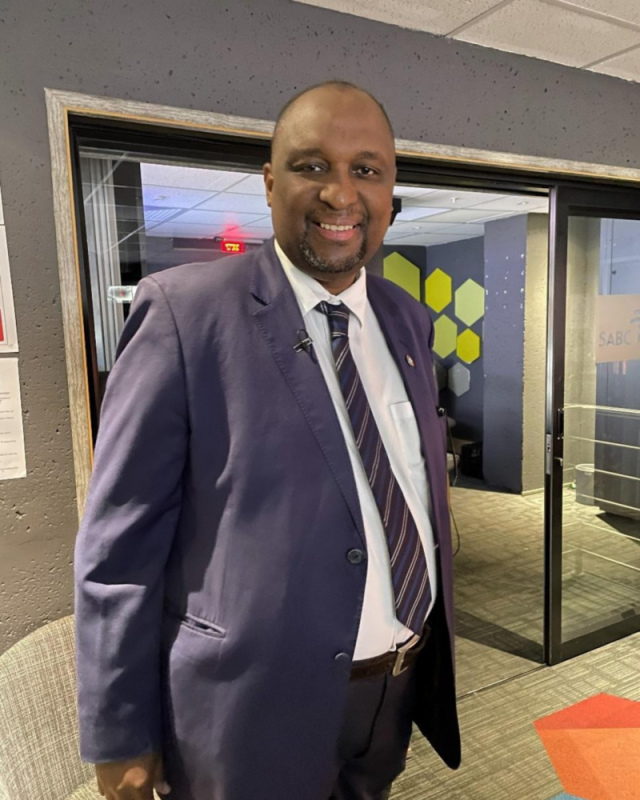
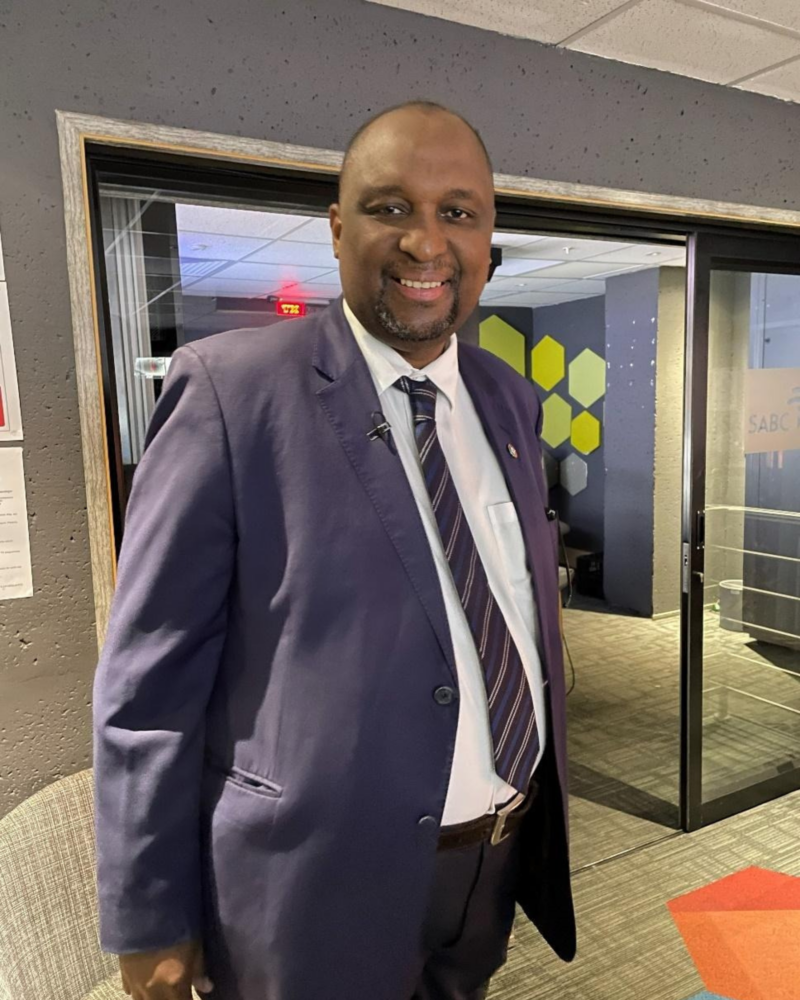
South Africa’s chief director of TB control and management is a large human being, tall and broad-shouldered, those shoulders almost always below a suit jacket, navy preferred. His features communicate a benevolent seriousness. An occasional, hesitant smile makes it easier to imagine the child self he is talking about.
“My parents were both educators, so from a young age one was taught discipline,” he says, confessing that he struggled with maths until his father insisted, “you just need to do redo and redo and redo, then you are sorted”.
Church-life defined the Ndjeka household, both the Catholic and Methodist churches.
“My father is a lifelong Methodist, my mom a Catholic. There was a kind of tension in that,” Ndjeka chuckles, although it was his father’s decision to send his children to Catholic schools, conceding that they were better resourced. But the moment school shut for holidays Ndjeka would be shunted across into the Methodist system.
“My main reflection on this is that we were kept busy — there was no question of having a social life outside church and being exposed to vices and different behaviours,” he says.
Ndjeka doesn’t just say he attended a Catholic school. He says: “Marist Brothers Bobokoli, in Kinshasa, where the priests were all Spaniards who struggled with French but excelled at teaching the sciences.”
“Detail matters,” he says.
“The Catholic church is a vast collection of communities, each with their own focus and emphasis. It’s a bit like when people talk generically of the Congo. About which Congo are they speaking — Republic of Congo or Democratic Republic of Congo?
“Also, my birth country has variously been called Congo Free State, Belgian Congo, Congo-Léopoldville, Democratic Republic of the Congo, Republic of Zaire and again DRC since 1997. So, when you are talking about a specific time period, you can’t just say, you know, this happened in the DRC.”
A passion for healthcare
Mobutu Sese Seko assumed power the year Ndjeka was born and held onto it until shortly before his death from prostate cancer in 1997.
“He was a soldier from the north, from a place called Gbadolite, who became a dictator. That single fact shaped so many lives, mine included,” says Ndjeka, who finished school with all distinctions but couldn’t get into medicine at the University of Kinshasa because Mobutu’s quota system for admissions, known as “regional balancing”, reserved the same number of positions for all provinces, no matter how small or large the population.
“I was from a populous province, where the competition for positions was very fierce,” he says.
Ndjeka’s father, a senior figure in the state education system, made sure the rector of the university saw his son’s grades, which amply fulfilled the requirements to study medicine. Ndjeka was registered a few weeks later.
“My parents divorced in my first year, which made it tough,” says Ndjeka, who kept going and graduated in October 1989, his sights set on becoming a neurosurgeon or ophthalmologist.
His first job out of university was in primary healthcare, however — a post with an Institute of Tropical Medicine Antwerp project in Kasongo Province.
Ndjeka explains that the institute was founded by King Leopold II, “who treated what was then called Congo Free State like a vast private farm. His administrators and labour were constantly dying of malaria and sleeping sickness, and so the Institute of Tropical Medicine was established to try and deal with that”.
It was a rich time in Ndjeka’s life, one that cemented a passion for public healthcare.
“I learnt about the management of specific diseases, including infectious diseases and the power of prevention through community involvement. They documented their work beautifully in that project and were very advanced in what they were doing.
“A lot of things we initiated in South Africa later, like a manual to help nurses manage patients at clinics, I first encountered at Kasongo in 1989,” says Ndjeka, who was looking ahead to furthering his studies in Belgium.
“After serving for a number of years it was part of my agreement with my employer to do a master’s and later a PhD but then came the incident at Lubumbashi University,” he says.
The road to Lebowa
In May 1990, students studying at the university protested against Mobutu’s regime, demanding his resignation. Mobutu sent in a military unit called Les Hiboux (“The Owls”) in reference to the fact that they operated only at night.
Over the course of a single night a number of students had been killed, leading the Belgian government to criticise Mobutu and launch an investigation into the massacre.
“Allowing the investigation to be completed would probably have led to Mobutu’s removal and transfer to the Hague to face justice at the International Criminal Court. So, instead, he terminated diplomatic relations with Belgium, and gave all Belgian diplomats 48 hours to leave the country. As a result, I lost my first job,” Ndjeka says, smiling ruefully.
Back in Kinshasa and suddenly without a plan, Ndjeka heard about an opportunity to study and work in South Africa.
“It’s an interesting story,” he says.
“For obvious reasons it had not been possible for the DRC to have strong formal ties to apartheid South Africa but in August 1989, just a few days after he became president, FW de Klerk visited Mobutu at his palace next to Lake Kivu. He was hoping to normalise relationships in the region. Shortly after his visit a South African embassy quietly appeared in Kinshasa.”
Like many students, Ndjeka frequented the cultural centres of major embassies, particularly the embassies of France and Belgium, because in these places he could access books that were not allowed in the country.
“You wouldn’t find books about Mandela anywhere else, for example, or even Patrice Lumumba [the first prime minister of the independent Congo]. Nothing that did not align with Mobutu’s worldview.
“We were in the habit of visiting embassies, reading books and exploring opportunities and in 1991 I paid a visit to the South African embassy,” says Ndjeka, who listened as career diplomat Kenneth Pedro extolled South Africa’s virtues, telling the young doctor not to believe everything he heard about apartheid. He also insisted that Ndjeka would have no difficulty finding a job.
Ndjeka decided to undertake a fact-finding trip and soon found himself with an offer to work in Botlokwa Health Centre in what was then the Lebowa “homeland”, today incorporated in Limpopo.
“Back then the health departments in South Africa’s homelands had these acute staffing shortages, mainly because white South African medical graduates weren’t interested in working in these places. To address the issue some administrations recruited expats.
“There was no formal programme for this but informally it was well supported,” says Ndjeka, who found he did not have to sit an exam in order to be registered with the Health Professions Council of South Africa or leave the country in order to receive a work visa.
“It shows you there was this need for doctors, such that, for a brief period, the normal requirements were waived and not just for Congolese doctors. In Lebowa I found a lot of doctors from Romania, a few Indians as well and I was told that in previous years there had been doctors from other European countries, especially Eastern Europe.”
Meeting Phaahla and Motsoaledi
Without a surgery at Botlokwa, Ndjeka found he was constantly shuttling between the health centre and Kgapane Hospital.
“It was not sustainable and so I set my sights on a position at Jane Furse Hospital in Sekhukhune District. Some doctors I knew there encouraged me to instead look at St Rita’s Hospital in Lebowa, an old Roman Catholic Mission hospital then in need of doctors.
“Dr Joe Phaahla [South Africa’s current deputy health minister] was the superintendent there at the time and he was happy for me to transfer from the clinic I was working at. Incidentally, Aaron Motsoaledi [South Africa’s current health minister] was then a GP at Jane Furse Hospital, just 12km or so from St Rita’s.
“Phaahla and Motsoaledi were close friends and I worked well with both of them,” says Ndjeka, who applied for and received the hospital superintendent job when Phaahla became Lebowa’s director of health in 1993.
Around this time, Ndjeka met and married Khethiwe Mtsweni, the environmental health inspector at St Rita’s. He later did a postgraduate diploma in health services management at Wits (1997-1999), followed by a family medicine-focused master’s at Medunsa, now Sefako Makgatho Health Science University (1999-2003).
“Those were intense years and of course the HIV epidemic was starting to move and our health minister was telling us to not entertain antiretroviral drugs [ARVs, for HIV treatment] and that people should get better nutrition instead,” says Ndjeka, who was appointed superintendent of Warmbaths Hospital in 1999.
There he collaborated with an NGO called the HIV/Aids Prevention Group in Bela Bela, led by Belgian doctor Cecile Manhaeve, on ways to prevent HIV transmission.
“It was bad — every few weeks we attended a funeral of one of the NGO staff members,” says Ndjeka, noting that the NGO secured access to ARVs several years before it became national policy to use them to treat HIV infection.
Ndjeka recalls that this “led to a lot of headaches” from the provincial administration, a factor in his decision to quit his hospital manager post and focus more fully on lecturing at Medunsa, something he had been doing part time for years.
“Then something interesting happened. The same people in the department who were uncomfortable with me introducing ARVs came and asked if I would set up a dedicated multidrug-resistant TB (MDR-TB) hospital for the province, at Modimolle.
“MDR-TB is a form of the disease caused by a TB germ that has managed to figure out how to fight standard TB medication, rendering it ineffective.
“When I asked: ‘But why do you want me to do this, because you know I am not a MDR-TB expert?’, they said: ‘Knowledge is acquired, it’s not congenital. We need you, the way you are. Someone who gets on and does things. And we have the resources to make you knowledgeable’.”
Ndjeka’s bosses kept their promise, allowing him to travel to the Centre of Tuberculosis and Lung Diseases in Riga, Latvia, to learn about the clinical management of MDR-TB. The visit took place shortly after the discovery of a cluster of extensively drug-resistant TB patients at the Church of Scotland Hospital in Tugela Ferry in KwaZulu-Natal in May 2005.
The acronym XDR TB was coined shortly afterwards, to describe this form of TB that was resistant to most of the standard TB drugs, making it much more life threatening than drug sensitive or “regular” TB.
The Tugela Ferry cluster made international headlines, with the New York Times dramatically noting: “When news of South Africa’s outbreak of extensively drug-resistant TB was announced in Toronto in 2006 at an international Aids meeting, it sent shudders through the ranks of infectious disease specialists. These virulent strains had rapidly killed 52 of 53 patients.”
Getting bedaquiline
The pressure was on the health department to act but years passed in which little progress was made. In May 2009, Ndjeka was asked to lead the country’s drug-resistant TB directorate.
“I found that actually we were quite bad. The department wasn’t monitoring or reporting on drug-resistant TB. Operational research had been left to the [then-] Medical Research Council to do and they published some papers but not enough.”
At the time, XDR TB was killing up to seven in 10 TB patients in South Africa’s worst-affected areas.
He set about trying to reorganise what he calls the “fight” against drug-resistant TB but it was slow going, with progress frustrated by a lack of clinical guidelines and differing ideas about what the drug-resistant TB guidelines should recommend.
Even at the international level, the World Health Organisation (WHO) was providing little to no guidance on some key aspects of drug-resistant TB care, notably the decentralisation of care from big hospitals to community settings.
“A lot of their expert advisers were still insisting that these patients needed to be hospitalised and isolated from everyone else.
“I argued (and it was also the view of an increasing number of South African TB doctors at the time) that in South Africa, which has one of the highest TB burdens in the world, we simply did not have enough beds to continue with this kind of an approach and should instead focus our efforts on identifying cases early and treating people who are not yet very sick in their communities.”
It was a watershed moment for the management of drug-resistant TB and Ndjeka’s instincts served South Africa well. By adopting a decentralisation policy in 2011 and showing that treatment success improved when it was rolled out correctly, South Africa helped drive a global shift to decentralised drug-resistant TB care, which is today recommended by the WHO.
Ndjeka quickly realised, however, that pushing for new solutions and breakthroughs alone would deliver nothing for drug-resistant TB patients.
“There are just too many diverging ideas. Too many egos and too many vested interests. One needs help,” he says.
With this in mind he established, in 2010, the national clinical advisory committee for drug-resistant TB, comprising TB experts inside and outside the public health system. It would prove to be one of his most enduringly powerful interventions, significantly increasing his access to expertise and giving him the courage of his convictions at a crucial time.
“The situation was intolerable in those years,” he says of the high death rates. “Those who survived were often left with deafness caused by a painful injectable antibiotic, called kanamycin, which was part of the standard treatment,” Ndjeka recalls.
The medicines for treating TB had not changed much in 50 years but in 2012 a promising new drug, bedaquiline, was approved by the Food and Drug Administration in the US. The problem was it was available only commercially there.
“After some lobbying, the manufacturer Janssen Pharmaceuticals [now Johnson & Johnson Innovative Medicine] offered to provide bedaquiline to some high-burden countries through an early access programme. I enthusiastically accepted this offer and the result was the establishment of South Africa’s Clinical Access to Bedaquiline Programme,” Ndjeka recalls.
This was yet another, and perhaps more significant, watershed in the treatment of drug-resistant TB.
Kid from Kinshasa
Advisory committee co-chairperson Francesca Conradie believes it “fundamentally changed the therapeutic landscape and challenged long-standing assumptions about how the disease should be managed.
Central to this shift, she says, was Ndjeka’s “visionary leadership”.
“He recognised early on the transformative potential of this approach and championed its adoption in the face of uncertainty and significant resistance from multiple quarters: concerns about preserving the drug for future use, regulatory hesitations and perhaps most pervasively, entrenched inertia within existing systems.”
As a result of South Africa’s pioneering role in clinical trials of bedaquiline-containing regimens and the country’s early adoption of injectable-free treatment from 2017 onwards, patients with drug-resistant TB today have a much higher chance of survival.
A 2026 study led by Ndjeka showed that bedaquiline-containing regimens known as BPaL-L, which have been offered in South Africa since 2023, have a treatment success rate of 79%.
Where treatment used to persist for 18 to 20 months, 88% of drug-resistant TB patients in South Africa are now treated in 6 months. And virtually no patient needs to endure the painful and potentially harmful injections that were unavoidable just a few years ago.
The kid from Kinshasa, who dreamed of Belgium but landed in Lebowa instead and came to lead South Africa’s fight against TB, finally received the doctorate that was denied him all those years ago in the DRC.
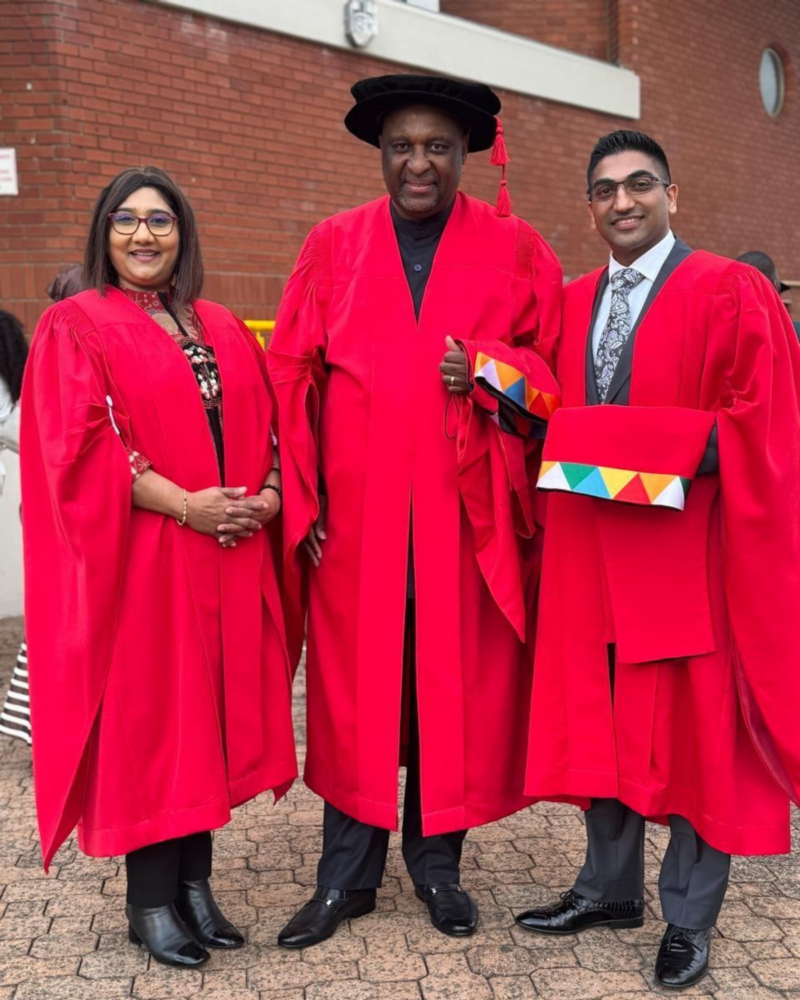
In fact, he received two: in August 2021 the University of Cape Town’s health sciences faculty recognised his work with an honorary doctorate. In September 2025 the University of KwaZulu-Natal awarded him with a doctor of philosophy in public health medicine for his study looking at the reasons treatment outcomes for drug-resistant TB improved in South Africa between 2011 and 2021.
It must have been a strangely gratifying experience, analysing progress he had a greater hand in achieving than anyone else.
I put this to him and he seems momentarily stuck for an answer but a smile briefly lifts his features and he says: “Yes … yes it was. Although I am more excited about the improvement of MDR-TB outcomes locally and that our work here has also influenced global advancements.”
This story was produced by the Bhekisisa Centre for Health Journalism. Sign up for the newsletter.
Norbert Ndjeka was born on World TB Day. Decades later, he would reshape how South Africa treats the deadliest forms of the disease