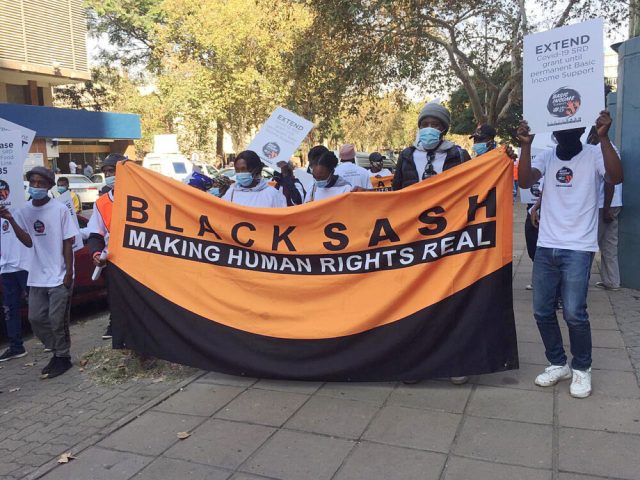
On Human Rights Day, South Africans are reminded of the freedoms we have won. But for millions of people, the real question is simpler and far more urgent. Can I afford food this week, or will my children go to bed hungry? Will my child stay in school, or will poverty make that constitutional promise meaningless? Will my grant come through, or will a system error decide my family’s fate? Will I be treated with dignity when I arrive at that government service office, or turned away again?
This is where Black Sash works every day. Not in theory, but in the real, lived experiences of people navigating poverty, unemployment, and an often-complicated state system. For more than seventy years, Black Sash has been part of South Africa’s story. Today, it is focused on one of the most practical and powerful levers for change: making sure the social security system works, and works fairly, for everyone.
From protest to practical impact
Black Sash was founded in 1955 by a group of women who refused to stay silent as rights were stripped away under apartheid. They protested, they stood in public spaces, and they helped people deal with unjust laws. President Nelson Mandela famously called the Black Sash “the conscience of white South Africa,” acknowledging their moral courage and vital role as one of the few white groups actively opposing apartheid and upholding liberty during the struggle. As we transitioned to a democracy, that spirit still defines the organisation, but the work has evolved. Today, Black Sash is less visible on the streets and more embedded in interrogating the systems that shape people’s lives. It focuses on fixing what does not work, holding institutions accountable, and making sure people can access what they are entitled to. This is not symbolic work. It is essential, practical, detailed, and often technical.

Why this matters right now
South Africa remains one of the most unequal countries in the world. Unemployment is significantly high, and millions of households rely on some form of social assistance to get by. For many families, social grants are not a bonus. They are the difference between coping and crisis. But the system does not always work as it should. Payments are delayed. Applications are rejected unfairly. People are excluded because of technical errors or unclear rules. When that happens, the impact is immediate and personal. A missed payment can mean no food, no transport, no way to meet basic needs. Black Sash exists to close the gap between what the system promises and what people actually experience.
What Black Sash does today – Making the system work bette
Black Sash works closely with communities across the country to understand what is going wrong in the system. It gathers real-time information from people on the ground and uses that evidence to push for improvements. Our strategic plan is to work towards defining a Social Protection Floor aligned with what government also wants in terms of its 2030 goals for the National Development Plan. We seek to advocate for a minimum basket of ‘goods and services’ to live a dignified life, and below which no person should fall – at any stage This might mean identifying patterns in rejected applications, highlighting service delivery failures, lack of implementation, gaps in the law or engaging directly with government to fix systemic issues. The goal is simple. When people qualify for government support, they should receive it efficiently without unnecessary barriers.
Driving smarter policy
Black Sash is also at the centre of national conversations about how South Africa tackles poverty. It played a key role in advocacy that led to the introduction and extension of the Social Relief of Distress grant for the unemployed, which now reaches close to eight million unemployed people who Black Sash continues to work with to ensure that this kind of support becomes more permanent and improved to build a system that supports people through periods of unemployment, not just in moments of crisis.
Helping people directly

When individuals run into problems with grants or access to services, Black Sash provides direct support through a national helpline. People can reach out by phone, WhatsApp, or email and get practical advice on how to resolve their issue at no cost to them. For many, this is the difference between being stuck and finding a way forward. At the same time, Black Sash strengthens a network of community advice offices across the country. These are local, trusted spaces where people can get help without needing to pay for legal services.
Building capability on the ground
Another key part of the work is training. Black Sash equips community organisations, paralegals, and frontline workers with the knowledge they need to support others. This creates a multiplier effect. Instead of helping one person at a time, it builds a network of people who can assist entire communities.
Why this should matter to you
If you are not in the NGO world, it is easy to assume this work is distant from your life. It is not. A functioning social protection system benefits the entire country. It reduces pressure on families, supports economic participation and creates more stable communities. When people can meet their basic needs, they are better able to look for work, support local businesses and contribute to the economy. There is also a broader point. A society where systems work fairly builds trust. A society where people are excluded or treated unfairly erodes it. Crime is a symptom of poverty and by addressing poverty in a meaningful way the quality of life for all can be improved. Black Sash operates in that space between policy and reality. It helps ensure that public systems deliver as they should.
A practical vision for South Africa
One of the organisation’s key priorities is the idea of a Social Protection Floor. In simple terms, this means a basic level of support that everyone in the country can rely on. This includes income and access to essential services like nutrition, healthcare, education, and basic services, transport and housing. It is not about creating dependency. It is about creating stability. It ensures that people are not pushed into crisis by circumstances beyond their control. Countries with stronger social protection systems tend to have more resilient economies and more cohesive societies. South Africa is no different.
Why support Black Sash
Black Sash is not a large, corporate-style organisation with unlimited resources. Its impact comes from focus, credibility, and deep connections to communities. Supporting Black Sash means backing work that is:
•Practical and results-driven
• Focused on systems that affect millions of people
• Grounded in real data and lived experiences
• Able to influence policy while also helping individuals directly
It also means supporting an organisation with a long track record of integrity and impact in South Africa.
The bottom line
Human Rights Day is often framed in terms of big ideas. Freedom, equality, justice. Black Sash works on what those ideas look like in practice. These may seem like small things, but at scale, they shape lives and communities. If South Africa is serious about reducing inequality and building a more inclusive future, then the systems that support people must function effectively. Black Sash is doing that work every day. Supporting it is not just about charity. It is about contributing to a more stable, fair, and functional society.
For more than seventy years, Black Sash has been part of South Africa’s story. Today, it is focused on one of the most practical and powerful levers for change: making sure the social security system works, and works fairly, for everyone.