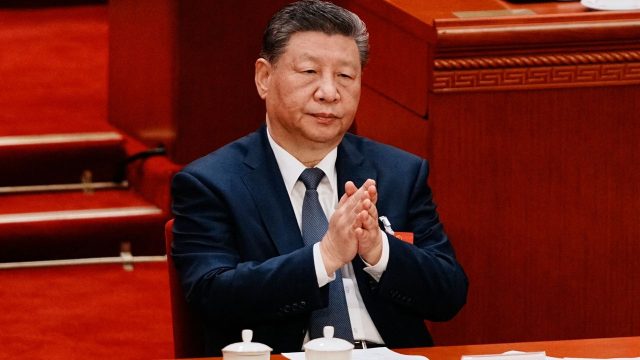
Is it “ethnic unity,” as China calls it, or ethnic supremacy? The country has adopted a sweeping new law that orders government agencies, private enterprises and parents to foster a “stronger sense of community among all ethnic groups” in the country, said Lou Qinjian, a delegate to the National People’s Congress, in multiple outlets. The new law may sound benign, but critics say the new mandate could erase and diminish cultural identities of Uyghurs, Mongolians and other minority groups in favor of the country’s dominant Han Chinese culture.
Binding minorities to the majority
Beijing wants China’s ethnic minorities to “blend in,” said The New York Times. Xi Jinping has “worked aggressively” during his decade in power to pressure minorities in Tibet and elsewhere to “identify first and foremost as patriotic citizens.” The new law furthers that mission with provisions that “touch on education, housing policy, entertainment and other areas” to create a “single national identity” forged by the Chinese Communist Party.
It orders that the Mandarin Chinese language be used in school instruction and other official business, and mandates that different ethnicities should live in mixed communities. The goal: to “bind China’s minorities,” said the Times, to the majority Han Chinese population. The law tells non-Han Chinese to “integrate themselves with the Han majority, and above all else be loyal to Beijing,” Cornell University’s Allen Carlson said to Bloomberg.
There are 56 officially recognized ethnic groups in China and “55 are getting squashed” by the new law, said The Economist. The edict is “born of fear” that minority groups are “proving too hard to control.” Early Communist governments allowed minority groups a “range of privileges” to follow their own religions and educate children in their native languages. But “outbursts of violence” over decades in Tibet, Xinjiang and Inner Mongolia persuaded leaders that “even relative autonomy had failed.” The question now is whether the new law might provoke resentments that may “eventually erupt.”
Cracking down
China started its “sinicization” of minority groups in the late 2000s, said BBC News. Monks have been arrested in Tibet, Uyghur Muslims sent to reeducation camps and Mongolians have battled authorities to preserve the right to teach children their language. The new law is the latest attempt to “cement Xi’s push toward assimilation” of minority groups.
Beijing’s apparent view is that “minority languages and cultures are backward and impediments to advancement,” said Ian Chong of National University of Singapore to the BBC. Xi is trying to build a “great and strong Chinese nation with a northern Han core.”
Chinese officials say the new law was drafted after consultation with “representatives from ethnic minority communities,” said Reuters. The rules put an emphasis on the “protection of cultural traditions and lifestyles of all ethnic groups,” said an editorial in China Daily, the state newspaper. Minority groups like the Tibetans, Mongols, Hui, Manchus and Uyghurs comprise less than 10% of China’s population, said Reuters, but they live mostly in “regions that together cover roughly half of the country’s land area, much of it rich in natural resources.”
Xi Jinping backs effort to assimilate minority ethnic groups