Two boys who survived a shooting that killed four members of their family, including their parents, in the northern West Bank town of Tammoun have described witnessing the attack that left them orphaned and without two of their brothers.
The attack happened on Sunday as the family returned from the nearby city of Nablus, where they had gone to buy clothes and other items for Eid al Fitr, which will be celebrated on Friday in Palestine.
Palestinian health authorities identified the victims as Ali Khaled Sayel Bani Odeh, 37, his wife Widad Osman Aql Bani Odeh, 35, and their two sons Muhammad, 5, and Othman, 7. Two other children travelling in the vehicle survived.
Palestinian officials said Israeli forces opened fire on the family’s car during a military operation near Tammoun, south-east of Tubas in the northern West Bank.

Video released by the Palestine Government Communication Centre shows one of the surviving boys recounting the attack. In the footage, the child said he and his brothers were travelling with their parents back from Nablus after buying clothes for Eid when their car came under fire.
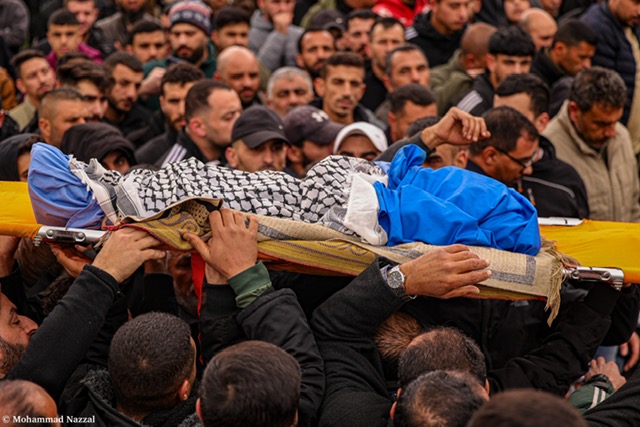
The footage also shows the surviving children saying farewell to their parents and two siblings before the burial.
Palestinian officials said the boys were mistreated by Israeli forces after the shooting. Israeli authorities had not immediately issued a statement on the incident.
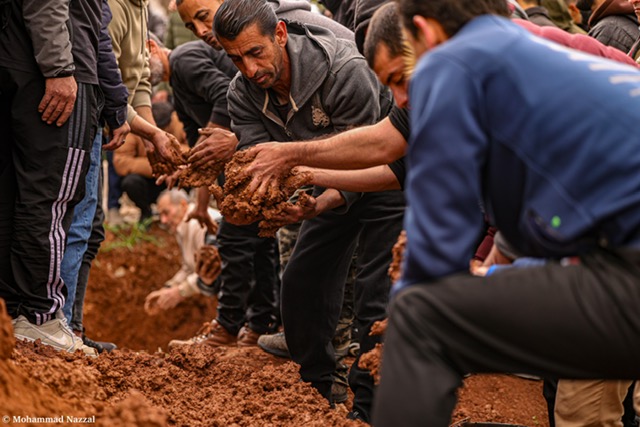
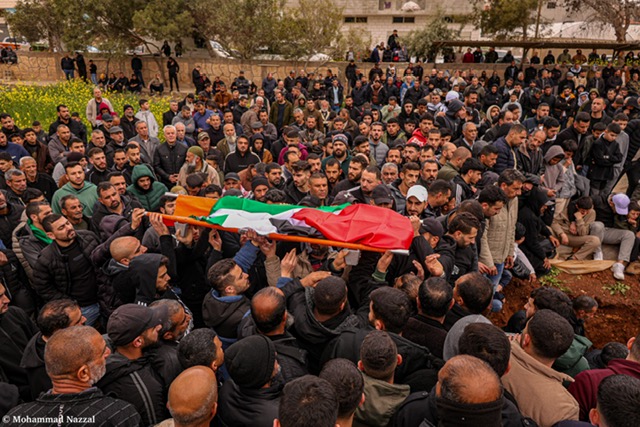
Hours later, hundreds of residents gathered on a hillside cemetery in Tammoun where the Bani Odeh family were buried. Children sat quietly near the edge of the burial ground while mourners passed handfuls of soil between them.
The killings unfolded as South Africa confirmed it is reviewing Israel’s latest legal response in the genocide case before the International Court of Justice (ICJ) in The Hague.
In a statement released on Sunday, the Presidency said Israel had submitted its counter-memorial to the court on 12 March, responding to South Africa’s memorial filed in October 2024.
Pretoria said it would analyse the submission before deciding whether to request permission to file further written pleadings or allow the case to proceed to oral hearings.
South Africa instituted the case in December 2023, arguing that Israel’s military campaign in Gaza breaches its obligations under the Convention on the Prevention and Punishment of the Crime of Genocide.
Israel rejects the allegation and maintains that its military operations are directed at Hamas after the attacks of 7 October 2023.
Israel’s counter-memorial marks a key stage in the legal proceedings. During the written phase of ICJ cases, both sides submit detailed legal arguments and evidence setting out their interpretation of international law.
Once the written phase concludes, the case moves to oral hearings before the court’s panel of judges. The court has issued provisional measures ordering Israel to take steps to prevent acts that could fall within the scope of the genocide convention and to allow humanitarian assistance into Gaza.
Yet conditions on the ground continue to deteriorate.
In the southern Gaza city of Khan Younis, video circulating on Sunday showed the wall of Al-Ribat College collapsing onto tents sheltering displaced families along Street 5. A child was killed and several others injured when the structure fell onto the encampment.
The area is one of many makeshift shelter sites for families displaced by months of bombardment that have devastated large parts of the Gaza Strip. Humanitarian organisations warn that restrictions on shelter materials have forced many families to live in tents pitched beside damaged buildings and rubble.
The case before the ICJ is drawing increasing international involvement.
Last week the Netherlands and Iceland filed declarations of intervention under Article 63 of the court’s statute, which allows states that are parties to a treaty under interpretation to present their legal views.
Their filings add to a growing list of countries seeking to participate in the proceedings, among them Spain, Mexico, Colombia, Chile, Libya, Türkiye and Palestine. Brazil and Belgium have also submitted interventions.
The US has separately intervened in the proceedings, disputing South Africa’s interpretation of the genocide convention and warning against lowering the legal threshold required to establish genocidal intent.
The expanding group of intervening states has transformed what began as a bilateral dispute between South Africa and Israel into a broader international legal contest over how the genocide convention should be interpreted in the context of modern warfare.
South Africa must now decide whether to submit a further written reply to Israel’s filing or allow the case to move toward oral hearings before the judges in The Hague.
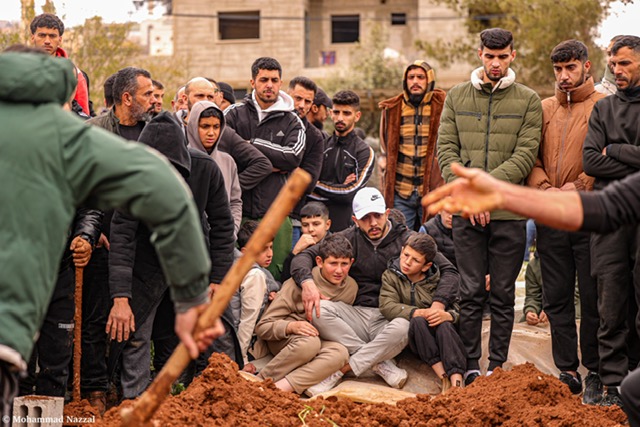
But in Tammoun, where the Bani Odeh family were buried on Sunday after returning from their Eid shopping trip, the legal arguments unfolding thousands of kilometres away offer little immediate relief from the violence shaping daily life on the ground.
As Israel submits its legal response to the ICJ, South Africa weighs its next move in the landmark genocide case amid ongoing civilian casualties in Palestine