Birgit Hackl (All at Sea) addresses the lionfish invasion afflicting the Caribbean region, echoing the battle cry of conservationists: “Eat them to beat them!”
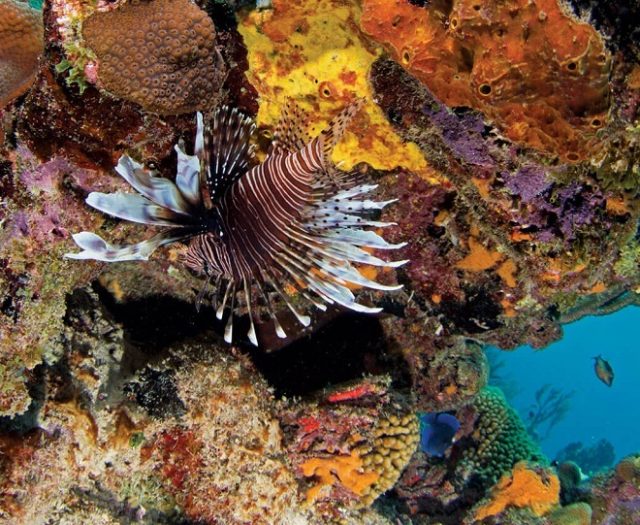
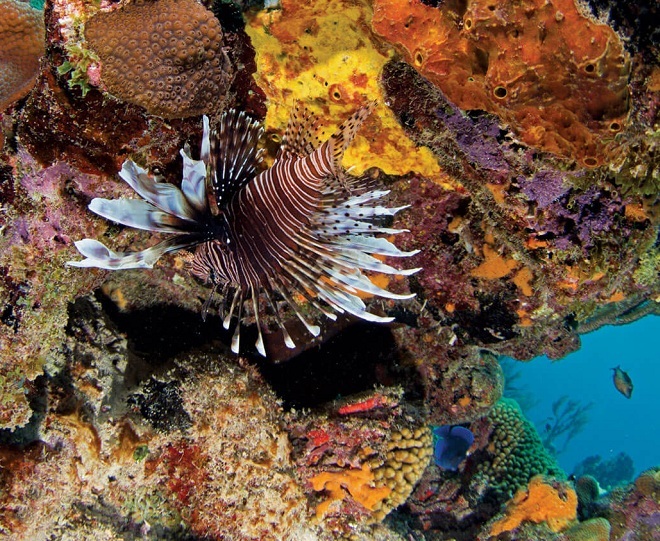
Have you ever encountered a lionfish while snorkeling? They look spectacularly pretty with their flamboyant fins, and even though those fins contain venomous spines, they move so slowly that they hardly pose a threat to divers. So why are conservationists as well as people from the fisheries making such a fuss about “the lionfish invasion”? The answer is simple: lionfish do not belong in the Caribbean. They have no niche in the eco-systems of the reefs here, can therefore relentlessly decimate native species and without natural predators they are spreading like a wildfire.
Spreading across the Caribbean
Two of the 12 species of Pterois, the red lionfish (P. volitans) and the common lionfish (P. miles) can nowadays be found in the waters of the Caribbean. They were first spotted in Florida in 1985. Nobody quite knows how they got there, but it is assumed that some irresponsible people thought it was a fun idea to release their pet fish from aquariums into the wild. Soon they were spotted all along the coast of Florida, in the 90s they spread up the east coast of the US, by 2000 they had reached the Bahamas, in 2010 they were already wide-spread over the islands and down to the South American and Central American coast and the invasion is still gaining momentum.
Top of Form
Bottom of Form
What is it about lionfish that makes them such successful invaders?
Unlike most fish that have spawning seasons, lionfish reproduce year round. Mature females release 50,000 eggs every three days, which are covered with a slimy repellent and not recognised as food by native fish.
They are very tolerant to differences in temperature and salinity, thrive in brackish water as well as in the ocean and can survive temperature extremes between 50°F and 95°F! They eat over 70 species of fish and many invertebrates, and gobble down prey that is up to half their body length.
18 venomous spines that contain a proteinaceous neurotoxin protect their bodies all around and deter basically all predator fish from daring to take a bite. On top of this they are great at hiding.
According to current research, a single lionfish residing on a coral reef can reduce recruitment of native reef fish by 79 percent. As lionfish populations grow, they put additional stress on coral reefs that are already suffering from effects of global warming and pollution, because lionfish eat herbivores and with these missing from the eco-system algal growth goes unchecked, which is detrimental to the health of corals.
What can we do against the invasion?
“Eat them to beat them!” is one of the battle cries of conservationists. Lionfish have tasty meat and once you have learned to safely remove all spines as a cook you can use them in a variety of dishes—raw, grilled or battered! Less risky is supporting local initiatives by watching out for lionfish on the market and in restaurants. Eating lionfish is practical, feasible, and should be promoted as it firstly reduces the number of these predators on the reefs and secondly takes away some pressure from herbivore fish that should be protected!
If you’re a spear hunter, you can actively help reduce the numbers of lionfish. All over the Caribbean “Lionfish Derbies” take place—organized events where divers first get instructions on regulations and safety and then compete to see who catches the most fish! There are dozens of organized derbies all over the Caribbean throughout the year, just google the area you’re in or ask at dive shops when the next one’s up! [. . .]
Read full article for tips on how to join lionfish derbies, such as the Curaçao Derby. For full article, see https://www.allatsea.net/pretty-deadly-delicious-the-lionfish-invasion-and-how-you-can-help/5
[Shown above: Detail of photo by Turtle and Ray productions.]
Birgit Hackl (All at Sea) addresses the lionfish invasion afflicting the Caribbean region, echoing the battle cry of conservationists: “Eat them to beat them!” Have you ever encountered a lionfish while snorkeling? They look spectacularly pretty with their flamboyant fins, and even though those fins contain venomous spines, they move so slowly that they hardly