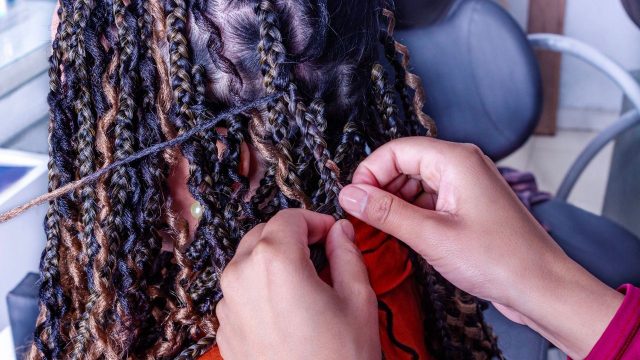
“They say beauty is pain, but it isn’t supposed to be deadly,” said Sheilla Mamona in Glamour. Yet, for millions of Black women across the world who regularly wear braids, twists and extensions, troubling new evidence suggests the synthetic hair used to create these styles may expose them to toxic substances. A number of studies in recent months have revealed many popular braiding hair products include dangerous chemicals and carcinogens. The latest, published by Consumer Reports in the US, found lead in 29 of the 30 brands of extensions tested, while another peer-reviewed study published by Silent Spring Institute earlier this month discovered hazardous ingredients across 43 hair samples.Such findings “paint a grim picture”, said Mamona. In a market where hosts of products contain potentially “harmful, and even deadly” products, Black women find themselves “disproportionately” at risk.
‘Beyond the scalp’
Across the globe, braids are one of the most “common and beloved hairstyles” for Black women, worn by “people of all ages”, often for “weeks at a time”, said The Guardian. Braids carry important “cultural significance”, serving as a way for Black women to “embrace” their afro-textured hair and wider “Black identity”. And the “low-maintenance hairstyle” is often convenient – used to “promote hair growth and combat breakage”. Skin irritation is perhaps the most common side effect from using synthetic braiding hair, yet many problems “go beyond the scalp”, said Healthline. Some of the “most concerning” chemicals found in braiding hair include organotins, acrylonitrile, phthalates and styrene. There are “multiple types of harm” associated with these chemicals, including hormone and reproductive health disruption, immune system impacts and links to cancer. Many products are also “ingredient-blinded”, meaning the synthetic hair lists “no ingredients at all”, said BET. This, combined with the fact many women keep extensions in their hair “for weeks”, means the potential for exposure to dangerous chemicals is “more frequent and more prolonged” than with other cosmetic products.
‘No parameters’
Despite these risks, synthetic hair is not always regulated like other beauty products. There are “no parameters” in the US for what materials can be used in synthetic braiding hair, said Kayla Greaves in Marie Claire. In the UK in January, the Commons Science, Innovation and Technology Committee of MPs did hold an oral evidence session on greater regulation for hair products – “the first evidence session of its new inquiry”. But in the meantime, Black women are “refusing to accept the lack of new innovation” for braiding hair, said Greaves. Many are looking for “ethically sourced” and “plant-based” alternatives, and also calling for “expanded testing” of not just synthetic hair, but also human hair products.Problems, though, continue to exist “beyond” the braiding hair itself, said CNN. There are various brands of “gels, glue, edge-control, oil sheen, detangling spray and other everyday products” used by Black women already found to contain dangerous chemicals, including “formaldehyde-releasing preservatives”.
Dangerous ingredients found in hair products have created a toxic twist in the beauty industry for Black women