What happened
The House Tuesday failed to pass a bipartisan aviation safety bill that won unanimous approval in the Senate in December. The 264-133 House vote fell just short of the two-thirds majority required under special fast-track rules typically used for non-controversial bills. Nearly all 133 no votes came from Republicans.
The bill would have required most aircraft to carry advanced location tracking technology, ADS-B In, that the National Transportation Safety Board said would have prevented last year’s deadly midair collision near Washington, D.C.
Who said what
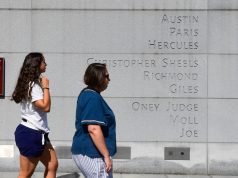
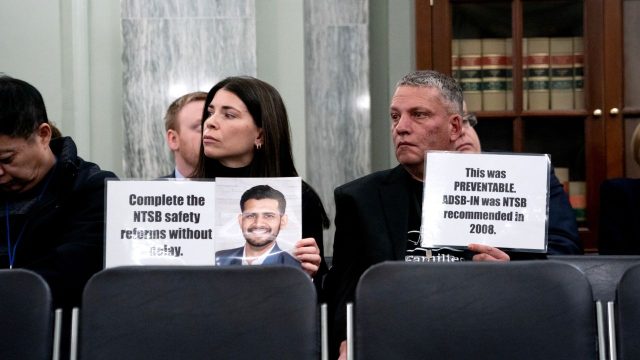
The Senate’s ROTOR Act is strongly backed by the families of the 67 people who died in the January 2025 collision between an Army helicopter and an American Airlines flight. It was also supported by labor groups, NTSB Chair Jennifer Homendy and, until Monday night, the Defense Department. But it “ran into headwinds in the House from several powerful Republican committee leaders,” NPR said.
The bill’s defeat was a “major win” for Transportation Committee Chair Sam Graves (R-Mo.), a longtime advocate for smaller private aircraft, Politico said. Graves argued that his rival ALERT Act addressed all 50 NSTB recommendations to prevent future collisions. But Homendy and the victims’ families oppose his legislation because it does not require the use of ADS-B In, as the NSTB has advocated since 2008.
What next?
The victims’ families said in a statement they were “devastated” by the Senate bill’s defeat and urged “House leadership to bring the ROTOR Act back for a vote that lets the majority pass it.” Given that Speaker Mike Johnson (R-La.) and his top lieutenants voted no Tuesday, “it is unlikely that the House will revive the bill,” The New York Times said. Sen. Ted Cruz (R-Texas), the ROTOR Act’s lead sponsor with Sen. Maria Cantwell (D-Wash.), called Tuesday’s vote a “temporary delay” and predicted the bill will “become the law of the land.”
The aviation safety bill would have required aircraft to carry advanced location tracking technology, which could have prevented last year’s deadly midair collision