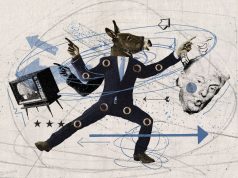
‘The protein bar delusion’
Nicholas Florko at The Atlantic
Protein bars “have come a long way from the chalky monstrosities that lined shelves not long ago,” says Nicholas Florko. For “anyone with a sweet tooth, it can feel like food companies have developed guilt-free candy. But that’s where things get disorienting.” Some protein products “are seemingly nutritionally benign, whereas others are nothing more than junk food trying to cash in on protein’s good reputation.” The “line between protein bar and candy bar has never been blurrier.”
‘How tech turned against women’
Laura Bates at the Financial Times
The “Big Tech lobby, well oiled by money and unprecedented proximity to those in positions of power, has done an overwhelmingly successful job of convincing us that regulation in their sector is a near-impossible task,” says Laura Bates. We are “sleepwalking into a new age of gender inequality, propelled at breathtaking speed by the implementation of untested AI.” Existing “forms of inequality and discrimination are being repeated and intensified by tools that have been trained on biased or misleading data.”
‘Tariq Rahman must revive Bangladesh’s economy’
Farid Erkizia Bakht at Time
New Bangladesh Prime Minister Tariq Rahman “will have to work hard to maintain political stability but his political success will depend on his primary task: reviving the economy,” says Farid Erkizia Bakht. Many “identify structural bottlenecks in distribution channels, rather than monetary policy alone, as the chief cause of elevated food prices. This is the Rahman government’s Achilles heel.” The “challenges are significant but Rahman does have a chance to revive the economy and bring stability to Bangladesh.”
‘How George Harrison transformed the music business’
Josh Harlan at The Wall Street Journal
Spotify “recently announced that it paid more than $11 billion in streaming royalties and other payments to the music industry in 2025,” and it is a “fitting occasion to recall how George Harrison, railing against Britain’s confiscatory tax regime, unwittingly helped create the template for this market,” says Josh Harlan. The Beatles’ “attempt to protect their income stream would backfire twice, costing them control of their own songs, but it also helped shape one of today’s most coveted asset classes.”
Opinion, comment and editorials of the day