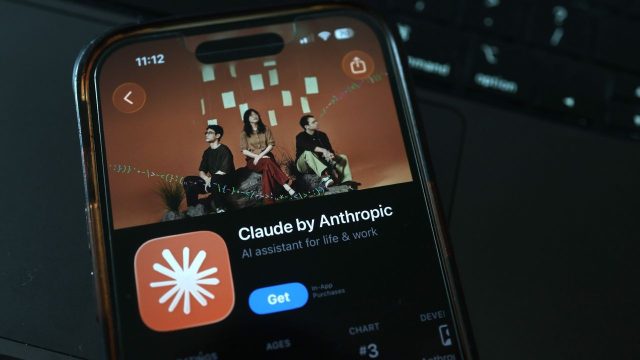
Software was famously supposed to “eat the world.” Now it’s being eaten by AI, said The Economist. That’s the argument from analysts who believe “an AI upheaval is just around the corner” for the trillion-dollar software industry. Market jitters are already starting. Shares of software firms like SAP, Salesforce, ServiceNow, and Workday plummeted last week after the artificial intelligence startup Anthropic announced a new tool that helps “programmers do their work far more quickly.” It was only one announcement. But it seemed to confirm investors’ fears that such programs will allow “companies to create much of the software they need themselves,” thus eliminating demand for SaaS (software as a service) those firms provide. As the carnage spread, one Wall Street analyst called it the “SaaSpocalypse.”
“Something momentous” is transpiring here that goes deeper than the market, said Noah Smith in his Substack newsletter. I think it is “the end of an economic age.” For decades, American wealth was concentrated in tech, and “nerds” like Mark Zuckerberg and Bill Gates fueled software’s boom. But a class of workers “can only earn fantastic wealth for so long before inventors start looking for ways to replace their skills with machines” that can do things more cheaply. The result will be “deep, far-reaching, systematic change” as knowledge workers become nothing more than a bottom line to be slashed in an age where “intelligence itself is a commodity to be bought and sold.”
It’s premature to pronounce the death of the software industry, said Dave Lee in Bloomberg. “Even some of AI’s biggest boosters don’t think the doom mongering on software is warranted.” Nvidia chief Jensen Huang called the sell-off “the most illogical thing in the world.” Huang is right. AI is “becoming more capable, but better AI does not automatically mean less need for specialized software.” Wall Street’s knee-jerk reactions, however, show that it “doesn’t have the temperament for the AI era.” The idea that corporations will immediately swap software for vibe-coded apps “is a stretch,” said Dan Gallagher in The Wall Street Journal. Third-party platforms are essential for companies to run critical tasks, such as payroll and IT. These systems require human expertise and can’t easily be overhauled. The problem is that AI has put software vendors in “the challenging position of having to disprove a negative.”
Anthropic is an uncharacteristic bogeyman, said Matteo Wong in The Atlantic. “Founded in 2021 by seven people who splintered off from OpenAI,” it has branded itself as the “ethical AI” firm, one that is “sincerely committed to safety.” Unlike other popular chatbots, Anthropic’s Claude “has not had any major public blowups despite being as advanced” as the rest of the field, if not more. Its emphasis on responsibility has helped make it attractive to businesses, and it now commands 40% of the enterprise-AI market. Many people “consider Claude the best AI at coding.” This seemingly puts Anthropic “at odds with itself.” It preaches responsibility but has no intention of slowing down. For all its sanctimonious warnings “about the possible harms of automation, Anthropic’s bots themselves are among the products that may take away jobs.”
A grim reaper for software services?