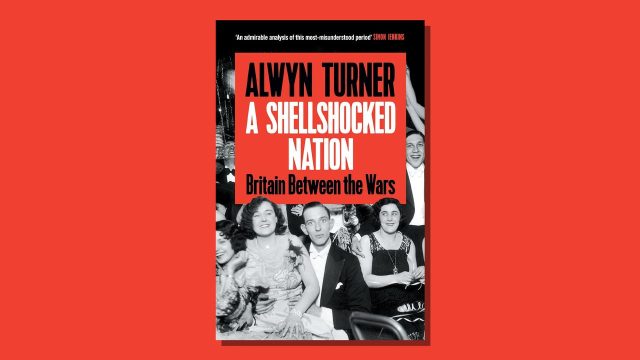
Alwyn Turner specialises in “bottom-up history – or, to be more precise, middle-up history”, said Robbie Millen in The Times. In his series of books on 20th-century Britain, his focus has been not so much on high politics as on “the ordinary, suburban and middlebrow”. In the latest, Turner sets out to “take the temperature” of the nation in the 20 years after the First World War. While he doesn’t ignore big events – the General Strike, the abdication crisis, the rise of the blackshirts – what preoccupies him is the “stuff of daily life”: what people were buying, what they were reading, “what entertained them on stage or in the flicks”. And so we learn about the radio-fuelled craze for “outrageous new dances” – the shag, the shimmy, the Suzie Q – and the era’s new consumer goods: “the Aga cooker, the Anglepoise lamp, the Goblin Teasmade”. We learn about the craze for “pot-boiling crime thrillers”, and for the “low-key adventures of Rupert the Bear”. Turner’s account is “witty and wide-ranging” and – refreshingly – he doesn’t scold his subjects for “not passing 21st-century morality tests”.
We think of the interwar years as a far-off era, “cosier and more patriotic” than our own, said Andrew Marr in The New Statesman. Yet, as Turner shows, there are striking parallels between the two periods. The 1920s was a time of political turmoil, with the two-party system breaking down, as “attention-grabbing challengers” came from Left and Right”, and “constant criticism of the second-rate, wooden-tongued national leaders in No. 10”. The “unruly new media” were lambasted for spreading lies and half-truths, and even today’s trans debate was foreshadowed by the “media outrage over androgynous haircuts and dress codes”. Building his account from newspapers and magazines, Turner has produced a typically “sharp and often surprising read”.
While the 1920s was a decade of stagnation, as Britain struggled to recover from the First World War, by the early 1930s the economy was “on an upswing”, said Jane Shaw in the Financial Times. Some 2.5 million houses were built during this decade, and there was a motoring boom, fuelled by the arrival of “cheaper cars, like the Austin Seven”. Britain became more “mobile and more connected, and one result was cheap holidays: Billy Butlin opened his first holiday camp in 1936”. I wish I’d had a history teacher like Turner, said Juliet Nicolson in The Spectator. With his “gift for wit and tenderness”, he makes the past feel knowable. “This is history at its most fun, immersive, human and revelatory.”
Alwyn Turner’s ‘witty and wide-ranging’ account of the interwar years