The ‘mother of all deals’ is as much about the tariff-heavy geopolitics of the Trump era as it is about bilateral trade
The year was 2007. Steve Jobs had announced the launch of the first iPhone, the sub-prime mortgage crisis was bubbling up in the US, the EU had enlarged to include Romania and Bulgaria, and India had for the first time become a trillion-dollar economy. This was when trade talks between Delhi and Brussels were initiated for the first time. But it wouldn’t be until this very week, almost 20 years later, that a deal was signed after a few final months of unusually accelerated negotiations.
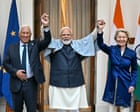
On Tuesday, the president of the European Commission Ursula von der Leyen, president of the European Council António Costa and India’s prime minister, Narendra Modi, announced the “mother of all deals”, which promises to bring together about 2 billion consumers and a quarter of the world’s GDP. The agreement opens parts of India’s famously protectionist domestic market with a focus on exporting manufacturing and services; in return, middle-class Indian consumers will find it cheaper to buy European cars and wine. The overarching EU-India comprehensive strategic agenda is really much larger in scope, taking in defence and security, commitments to multilateralism, mobility and cooperation in a range of areas.
Ravinder Kaur is professor of Asian studies at the University of Copenhagen and is writing a book about the history of the global south
Continue reading…The ‘mother of all deals’ is as much about the tariff-heavy geopolitics of the Trump era as it is about bilateral tradeThe year was 2007. Steve Jobs had announced the launch of the first iPhone, the sub-prime mortgage crisis was bubbling up in the US, the EU had enlarged to include Romania and Bulgaria, and India had for the first time become a trillion-dollar economy. This was when trade talks between Delhi and Brussels were initiated for the first time. But it wouldn’t be until this very week, almost 20 years later, that a deal was signed after a few final months of unusually accelerated negotiations.On Tuesday, the president of the European Commission Ursula von der Leyen, president of the European Council António Costa and India’s prime minister, Narendra Modi, announced the “mother of all deals”, which promises to bring together about 2 billion consumers and a quarter of the world’s GDP. The agreement opens parts of India’s famously protectionist domestic market with a focus on exporting manufacturing and services; in return, middle-class Indian consumers will find it cheaper to buy European cars and wine. The overarching EU-India comprehensive strategic agenda is really much larger in scope, taking in defence and security, commitments to multilateralism, mobility and cooperation in a range of areas.Ravinder Kaur is professor of Asian studies at the University of Copenhagen and is writing a book about the history of the global south Continue reading…