
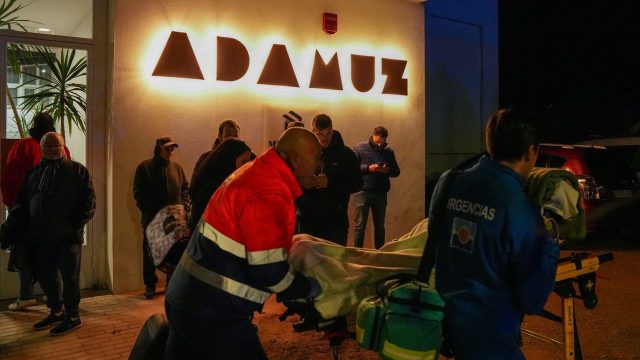
At least 39 people have died following a high-speed collision between two trains near Córdoba in southern Spain. Around 400 people were on the trains and more than 120 required treatment from the emergency services.
The death toll is “not yet final”, said Spanish transport minister Óscar Puente, who has launched an investigation into the cause of the “extremely strange” incident.
This is Spain’s worst train crash since 2013, when a high-speed derailment in Galicia, northwest Spain, left 80 people dead and 140 others injured.
What happened?
At around 7.39pm local time on Sunday, a high-speed Iryo train from Málaga to Madrid derailed near Adamuz, near Córdoba. Carriage six, seven and eight – which contained “about 50 people”, said El País – landed on the adjacent tracks and was then hit by a train from Madrid on its way to Huelva.
The Iryo train “was not travelling at such a high speed”, though it has “not yet been determined how fast it was going”, and was able to brake following the initial derailment. The second train, an Alvia, was travelling at “200 kilometres per hour [125mph] parallel to the Iryo train at that moment”, then derailed and fell down a “five or six metres high” embankment.
Members of Spain’s civil guard and civil defence “worked on site throughout the night”, and the Spanish Red Cross set up a help centre in the nearby town of Adamuz, said Euronews. Initial photos and videos showed “twisted train cars lying on their sides under floodlights” as emergency services tried to help survivors.
Why did it happen?
The official cause is “not yet known”, said the BBC. “An investigation is not expected to determine what happened for at least a month.”
This was an “extremely strange” incident, said Puente. It occurred on a “straight stretch of track”, the train was “relatively new” and the track had been “recently renovated”, so it is difficult to say with any certainty what the causes might have been, said La Vanguardia. Iryo confirmed that its train, manufactured in 2022, underwent an inspection as recently as 15 January.
The stretch of track where the crash took place “recently received an investment of more than 700 million euros (£608 million) for renovations which were completed in May”, said The Telegraph.
What are the authorities doing next?
Forty-three people – 39 adults and four children – remain in hospital, with 13 of them in intensive care, said the BBC.
Renfe – Spain’s national state-owned railway company – believes it will take “more than four days to resume service between Madrid and Andalusia”, said Spanish newspaper ABC. Spain has the largest high-speed rail network in Europe, second only globally to China, with almost 2,000 miles of track.
Spain’s Prime Minister Pedro Sánchez has cancelled his trip to the World Economic Forum in Davos because of the train crash, said Sky News. “Today is a night of deep pain for our country owing to the tragic rail accident in Adamuz,” he said on X. “No words can alleviate such great suffering, but I want them to know that the whole country is by their side in this tough moment.”
King Felipe is expected to visit the accident site tomorrow, said Sky News. Attending a funeral in Greece, the family has confirmed they would return “as soon as possible”.
The country experienced its worst rail accident since 2013, with the death toll of 39 ‘not yet final’


