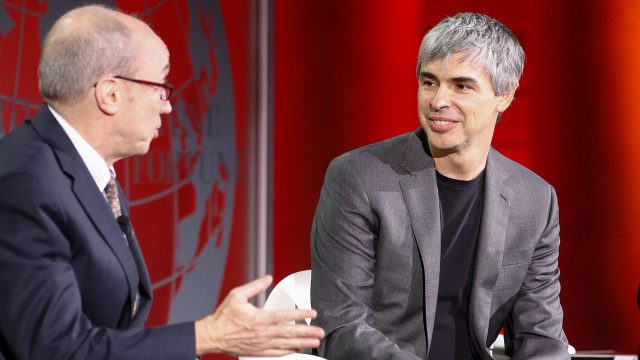
A proposed ballot measure that could tax California’s richest residents has the state’s billionaire class thinking of “cutting or reducing their ties to the state,” said Ryan Mac in The New York Times. Backed by a prominent health-care union, the measure calls for a one-time tax of 5% on all individuals with a net worth of at least $1 billion. They could choose to pay it all at once or spread the payments over five years. The union and other advocates of the tax argue that it would generate “up to $100 billion from about 200 billionaires,” with the revenue going to state health care, education, and food assistance programs imperiled by federal budget cuts. But the possibility of a new tax—potentially on unrealized “paper” fortunes driven by Silicon Valley’s artificial intelligence boom—has residents such as Larry Page and Peter Thiel already “making moves to decrease their presence in California.”
And who can blame them, said John Gustavsson in National Review. “One-time taxes should have specific, one-off aims: winning a war, building a dam, paying down a debt. This one does not.” Its amorphous objectives make it “worse than a recurring wealth tax,” which is at least predictable as “a standard cost of doing business.” A one-time tax, however, is never really one time: “There will eventually have to be another wealth tax to keep the gravy train rolling.” This “nonsensical and counterproductive” approach can only serve to “push innovators and job
creators out of California,” said The Orange County Register in an editorial. Proponents argue that “5% is a drop in the bucket” for a billionaire. But that argument “pretends that people don’t respond to incentives and disincentives.” California, home to Silicon Valley, shouldn’t scare off the golden goose.
The billionaire flight threat is a myth, said Teresa Ghilarducci in Forbes. “There is little to no economic evidence showing that billionaires will move to avoid a small and one-time wealth tax,” because most ultrawealthy moguls “remain anchored by business interests and family ties.” California’s tax is also “exceptionally well-designed” because it contains a moral component: It seeks to address a “humanitarian crisis caused by the upcoming extraordinary federal cuts.” Unfortunately, most wealth taxes sound much better than they actually are, said Timothy Noah in The New Republic. Nearly every developed country that’s tried to impose one “ended up repealing it” because “they raised a pittance in revenue.” Not because people fled, but because billionaires happen to be quite good at “shifting their assets around to avoid the tax.” If we want to reduce inequality, one-time gimmicks aren’t enough. Instead, “we ought to tax high incomes at a much higher rate, and increase capital gains and corporate tax rates as well.”
Larry Page and Peter Thiel may take their wealth elsewhere