A hugely controversial Israeli settlement project, with a bypass road that closes off the occupied West Bank to Palestinians, has cleared planning hurdles and is out for tender.
Thousands of homes are to be built in the E1 area east of Jerusalem, in a move that will effectively divide the West Bank. And, in doing so, it will, “bury the idea of a Palestinian state”, said Israeli finance minister Bezalel Smotrich.
What is E1?
First proposed in the 1990s but, until now, frozen by pressure from the US, E1 covers the tract of desert between East Jerusalem and the large Israeli settlement of Ma’aleh Adumim. “It would be the last link in a chain of building projects that will slice the West Bank in half, and sever it” from East Jerusalem, which “Palestinians hope one day will be the capital of their independent state”, said The Telegraph.
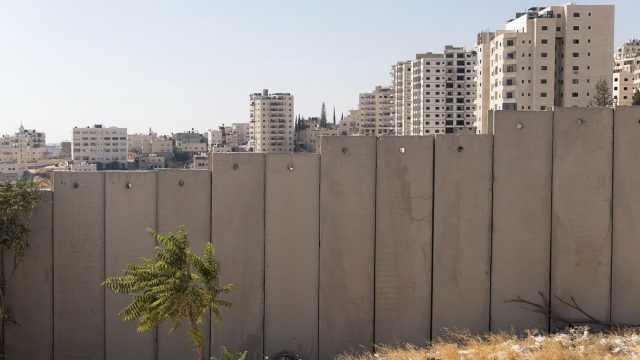
The public tender proposes 3,401 housing units and a dual-use bypass road that is “designed as a sealed transit corridor for Palestinian vehicles”, said The Guardian. This provides Israel “with a pretext to bar Palestinians from existing roads in the planned settlement area”. Israeli politicians have named the planned bypass “sovereignty road”; its opponents call it “apartheid road”.
The Israelis could remove the settlement in the future, “as it did with its ones in Gaza in 2005”, but that seems very unlikely, given current “strong support for the settlements among Israel’s government and even some opposition parties”, said The Associated Press.
Is it legal?
The Palestinian authorities, and much of the international community, have repeatedly called all Israeli settlements illegal, but this has not stopped their rapid expansion in the West Bank since Israel seized control of the territory in 1967.
The West Bank is split into three areas: A, B and C. The Palestinian Authority has nominal control over the small, scattered A and B zones, while Area C, where E1 is located, covers about 60% of the total territory and is controlled by Israel. Although it is “fundamental to the contiguity of the West Bank and the viability of Palestine and its economy”, according to a 2015 UN Special Coordinator’s report, Area C has become increasingly dotted with Israeli infrastructure and settlements, many of them surrounding main Palestinian population centres.
Area C, and E1, fall outside the Green Line, which distinguishes Israel from Palestine in the eyes of the international community. This means that, although Israel has military and civil control of the area, granted by the Oslo Accords in the 1990s, it is not sovereign Israeli territory.
Despite the International Court of Justice repeatedly ruling that Israel’s settlements should be withdrawn, “there is no sign of that happening”, said Reuters. And “by linking up with other Israel-controlled areas”, the E1 settlement “would go still further”.
Why is it so contentious?
The E1 “triangle of land” between Jerusalem, the major West Bank cities of Ramallah, in the north, and Bethlehem, in the south “is critical for the development and prosperity of a future Palestinian state”, said The Guardian.
A settlement there would forcibly displace existing Palestinian and Bedouin communities and, by dividing the West Bank in half, prevent the establishment of a contiguous Palestinian state. It is “intended to create irreversible facts on the ground leading to a one-state reality”, said the anti-settlement monitoring group Peace Now.
For Israeli hardliners, this is very much the point. Smotrich has said E1 will practically “erase” the idea of Palestinian state. It “consolidates the Jewish people’s hold on the heart of the land of Israel” and “every settlement, every neighbourhood, every housing unit is another nail in the coffin of” the “two-state delusion”.
That is the “real concern right now”, said The Independent when a number of countries, including the UK, formally recognised the Palestinian state last year. “Without concrete action”, recognising statehood is ultimately “pointless, as there won’t be anything left to be a state”.
Controversial new settlement in occupied territories makes future Palestinian state unviable, critics claim