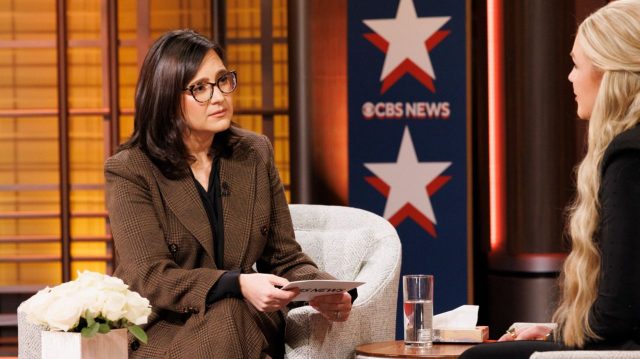
If the goal of CBS News editor-in-chief Bari Weiss is to put her network’s content in front of as many eyes as possible, her decision to hold a previously greenlit “60 Minutes” report on American deportees at El Salvador’s infamous CECOT prison was a rousing success. In the days since the report was initially scheduled to air, digital samizdat copies have proliferated across multiple social media platforms, fueled in part by frustrations with Weiss’ censorial efforts — and likely spreading far beyond “60 Minutes’” core television viewership. The episode has become a flashpoint in a larger debate over the network’s relation to the Trump administration and CBS’ obligations to the public discourse.
‘Veto power over journalism’
While the “60 Minutes” CECOT report had initially “been cleared by the network’s usual process and was previously vetted by standards, legal and senior editors,” Weiss’ insistence on an on-camera statement by the Trump administration — which had previously denied a request for comment — has “fueled internal tensions” at the show, and across CBS more broadly, The Washington Post said. “60 Minutes” reporter Sharyn Alfonsi’s account of what she deemed Weiss’ “political” interference seemed like the “earth-shattering moment that staffers have feared” since billionaire Larry and David Ellison purchased the network and installed Weiss at its top, said CNN.
By refusing to run a story unless it has a White House comment, CBS under Weiss has given the Trump administration “veto power over journalism,” media reporter Bill Carter said on X. Staffers with “integrity” will “likely quit, because it isn’t a news division anymore. It’s TASS,” a reference to the Russian state news agency.
The story being “factually correct” and having “undergone a legal review” didn’t seem to matter, said The Cut. Though Weiss is “not an especially deep thinker,” she remains an “adept mogul” who “knows how to play the Hollywood game.” Trump’s efforts to “re-industrialize the economy or prosecute his enemies have floundered,” but his plan to “corrupt the media is starting to work,” said Jonathan Chait at The Atlantic. After the President initially lauded Weiss’ appointment atop CBS News, only to complain she wasn’t “acting quickly enough to impose pliant coverage,” Weiss’ decision to hold the previously vetted CECOT story suggests “it’s not the public’s trust she is concerned about but Trump’s.”
More ‘confrontation and drama’
Alfonsi’s claim that Weiss had given the administration a “kill switch” over the network’s news reporting “sounds very bad,” Graeme Wood said at The Atlantic. But Weiss’ memo explaining her decision to CBS staff “does not say the segment should never run.” Rather, it stresses a need for “more confrontation and drama,” which is itself “more of what Weiss was brought in to CBS three months ago to provide.”
Nevertheless, there is an “upside” to the fractured news landscape of which Weiss is now a major player, said The Cut. With corporate media “less powerful than it once was,” it’s “far harder for a strongman president like Trump to control the flow of information,” as demonstrated by the surge in bootlegged copies of the CECOT segment across social media.
By blocking an approved segment on a controversial prison holding U.S. deportees in El Salvador, the editor-in-chief of CBS News has become the main story.