Since his death, aged 44, in 1894, Robert Louis Stevenson has had a “distinctly mixed” literary reputation, said Andrew Motion in The New Statesman.
To many modernists, and especially the Bloomsbury Group, his adventure-filled novels – among them “Treasure Island”, “Kidnapped” and “Strange Case of Dr Jekyll and Mr Hyde” – “looked old hat”. Like Kipling, he has sometimes seemed to be “on the wrong side of history”, and has been dismissed as a mere children’s writer. Yet he hasn’t lacked for heavyweight admirers – Jorge Luis Borges, Vladimir Nabokov, Hilary Mantel – and has remained popular with general readers.
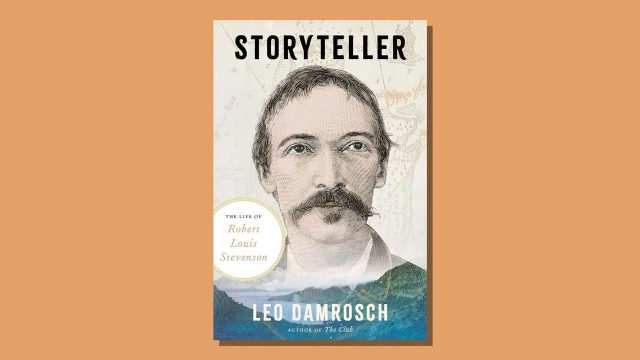
In his “sensible, sympathetic and thorough” biography, the American scholar Leo Damrosch chronicles Stevenson’s “fascinating” life and offers “wise” judgements about his work. “Stevenson was a wonderful man and at his best a great writer”: this “valuable book” captures those qualities.
Born in Edinburgh in 1850, “Stevenson was not supposed to be a writer”, said Meghan Cox Gurdon in The Wall Street Journal. His grandfather and father were civil engineers, responsible for many of Scotland’s earliest lighthouses, and they expected him to enter the family business.
But the “sickly” young man – who was plagued all his life by “bad lungs” – was drawn instead to a bohemian milieu. A “stupendous conversationalist”, who wore “velvet jackets and flamboyant sashes”, Stevenson fitted in easily: he befriended writers such as Edmund Gosse and Henry James (as well as the one-legged poet and editor William Ernest Henley, who helped inspire Long John Silver) and began publishing essays and travel articles. “Much to the grief of his Presbyterian parents”, he also declared himself an atheist.
In 1876, while in France, Stevenson “fell completely” for Fanny Osbourne, an American 10 years his senior with an estranged husband back in California, said David Mills in The Sunday Times. He followed her to America (though the journey “nearly killed him”) and they married in 1880. They settled in Bournemouth, but later moved to America, and “ultimately on to Samoa where, in 1894, Stevenson died of a stroke”.
Although Stevenson is a riveting subject, Damrosch’s ignorance of Britain leads to some errors – as when he claims that “Cockfield in Sussex” lies “40 miles east of Cambridge”. But this is, overall, a “generous and capacious account”, marked by “satisfying touches of offhand laconic wit”, said Margaret Drabble in the TLS. As such, it’s a “fitting tribute” to a “master storyteller”.
Leo Damrosch’s ‘valuable’ biography of the man behind Treasure Island