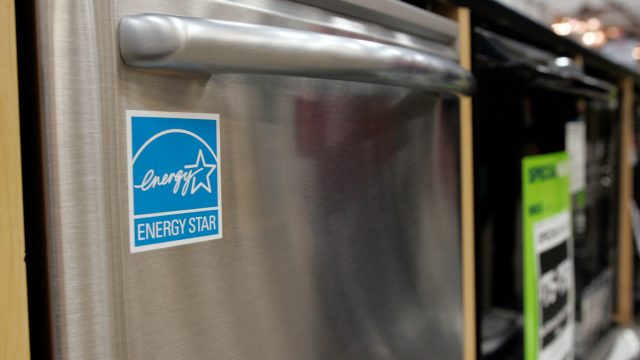
President Trump’s war on appliance standards won’t help your budget, said Tik Root in Grist. After attacking low flow showerheads and LED lights, the White House has now set its sights on the federal Energy Star program, which it wants “eliminated.” Launched in 1992, Energy Star has set “efficiency specifications for products ranging from dishwashers to entire homes.” It also offers federal rebates for efficient appliances and a federal tax incentive for building Energy Star homes. Certification is voluntary, but most major manufacturers participate because consumers overwhelmingly like it. “More than 1,000 companies, cities, and groups wrote a letter to EPA Administrator Lee Zeldin urging him to support the program,” noting that it costs only $32 million to administer, yet it saves American households $40 billion annually on energy bills.
Manufacturers can market energy savings without a federal program, said Jeff Luse in Reason. This is “yet another example of the government doing a job that the private sector could do.” In fact, the gigantic influence of Energy Star—with its signature blue labels—has likely crowded out even “more accurate ways to measure energy operating costs.” Except this is not really about energy costs, said Elizabeth Kolbert in The New Yorker. Lowering those was a Trump campaign vow. But in reality, the administration is much more interested in sabotaging anything remotely “related to curbing greenhouse gas emissions.” The second Trump term “has been to climate protection what the Visigoths were to Rome,” and even a program that is as “unusually well known and popular” as Energy Star is a target.
Meanwhile, utility companies are seizing the moment to raise prices, said Jamie Smyth and Amanda Chu in the Financial Times. Utility bills are up 6 percent year over year, far outpacing inflation. Last month, Dominion Energy, one of America’s biggest utilities, “proposed raising consumer bills by 14 percent next year to cover costs linked to soaring electricity demand” from AI data centers. “A typical monthly bill for a Dominion customer” is already $140. Similar requests to regulators have been made by other U.S. utilities, including Con Edison, which hopes to jack up its prices on New York City residents by 11.4 percent. We’re already entering a point of “energy scarcity,” said Mark Gongloff in Bloomberg, and a federal baseline for energy efficiency helps “ease the strain on electric grids” that Trump “claims to be so worried about” as he advances AI initiatives. “It’s pretty obvious by now that Trump’s real goal is probably not alleviating some sort of energy emergency or cutting Americans’ bills.” It’s just burning more oil, gas, and coal to fulfill his promise to the fossil fuel industry.
The Energy Star program saves Americans billions of dollars, but the Trump administration plans to ‘eliminate’ it.