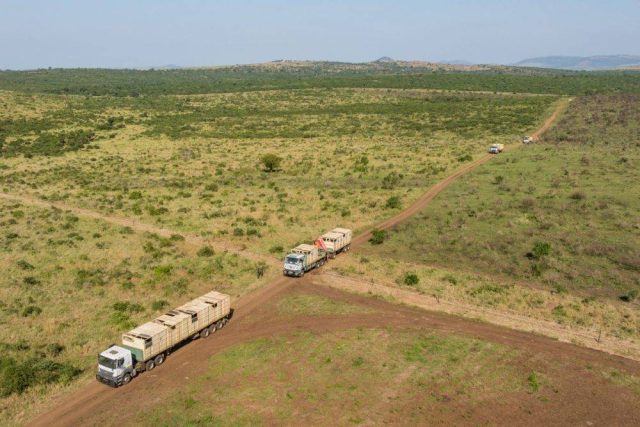
African Parks has taken the first steps to relocate captive-bred southern white rhinos after it became the owner of the world’s largest captive rhino breeding operation, which was facing financial collapse.
The nonprofit conservation organisation said on Thursday it had donated 40 of the 2 000 rhinos that formerly belonged to controversial breeder John Hume to the Munywana Conservancy in KwaZulu-Natal, in support of its successful conservation and community efforts. It purchased Hume’s Platinum Rhino in September last year.
This move marks the first translocation under Rhino Rewild, an “audacious” decade-long plan to rescue and rewild the 2 000 rhino, which formerly roamed on Hume’s ranch in the North West, into secure protected areas in Africa.
The Munywana Conservancy is a 29 866 hectare reserve that is upheld through a collaboration of community and private landowners including the Makhasa Community Trust, the Mnqobokazi Community Trust, &Beyond Phinda and Zuka Private Game Reserves.
“We are extremely pleased to receive these 40 rhinos from African Parks to supplement the current population of white rhino at our community conservancy,” the chairperson of the Makhasa Trust, Thokozani Mlambo, said in a statement.
“We see this as recognition of the important role that community-owned land plays in conservation, and we are proud to be collaborating in such a significant partnership to rewild rhino across our continent, The Makhasa Trust is one of the four primary shareholders of the Munywana Conservancy.”
According to African Parks, the conservancy offers a secure environment to support the rewilding of southern white rhino.
“Munywana’s current rhino population will be bolstered, enhancing genetic diversity, aiding future rhino translocations to other locations, and supporting tourism, which is a key driver of the local economy,” it said.
The main objective, according to African Parks, is to rewild all the rhino to well-managed and secure protected areas, establishing or supplementing strategic populations, ultimately helping to “de-risk” the future of the species.
The government is “very supportive” of the plan by African Parks to purchase and rewild the rhino and remains a key partner in providing technical and scientific advice and the support needed “to carry out this conservation solution in South Africa and on the African continent”, said Forestry, Fisheries and the Environment Minister Barbara Creecy.
To achieve a successful outcome of this translocation, the animals’ body condition and parasite adaptation will be closely monitored as they adjust to their new environment, African Parks said. The conservancy will also implement intensive security measures to ensure the safety of the 40 dehorned rhinos.
Both African Parks and the conservancy have the same ethos and guiding principles on conservation, and “in that spirit the Munywana has gladly accepted this donation, enabling these rhino to commence the process of becoming fully wild and free-roaming”, said Dale Wepener, the warden and conservation manager at the Munywana Conservancy.
The crux of the solution, and the ultimate success for rewilding all the rhino, lies in the existence of safe, well-protected and effectively managed areas across the continent, of which the Munywana Conservancy is an “excellent example”, noted Peter Fearnhead, the chief executive of African Parks.
“Rhino Rewild is one of our most ambitious undertakings to date, where together with a multitude of governmental, conservation and community organisations, and key funders, we have the rare opportunity to help de-risk a species, and in the process to help secure some of the most critical conservation areas not just in Africa, but in the world,” he said.
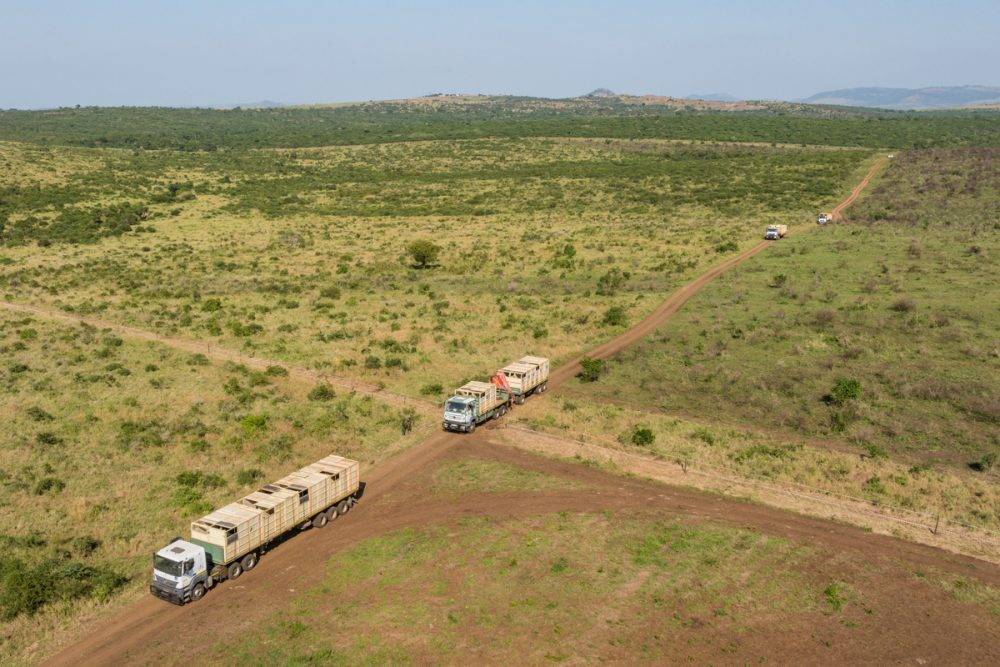
This first translocation was carried out by African Parks, &Beyond Phinda, Conservation Solutions and WeWild Africa with the financial support for the move provided by The Aspinall Foundation and The Wildlife Emergency Fund.
The rhinos, which are part of the 2 000 that belonged to controversial breeder John Hume, have now been relocated to a conservancy in KwaZulu-Natal