
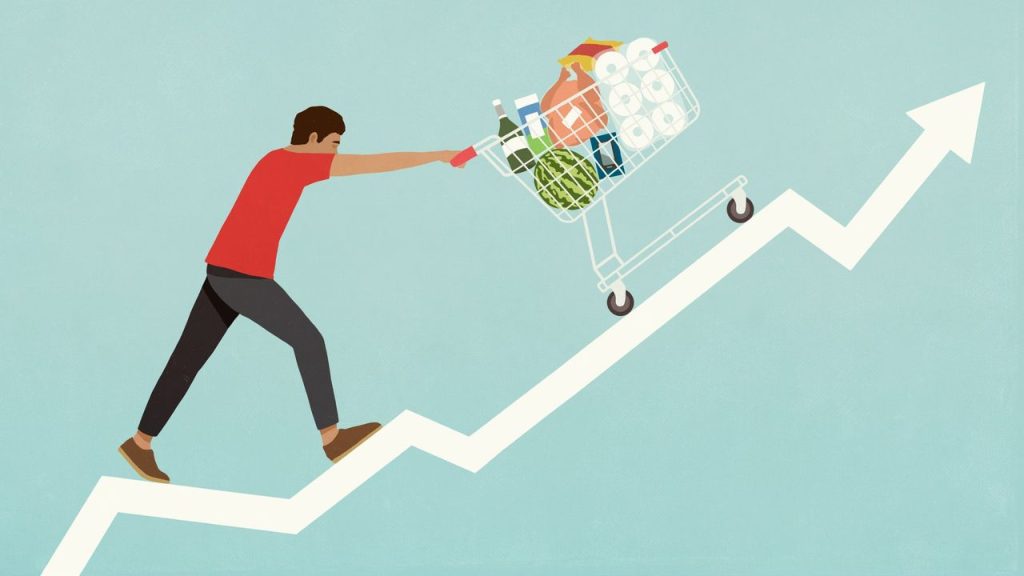
Sticking to your budget can be hard enough without inflation. But when prices on everything from gas to groceries are steadily creeping upward, sticking to your plans for spending can feel like a losing battle.
When your money is not stretching as far as it used to, creating a budget — and sticking to it — becomes more important than ever. And while you may not be able to push the price of gas back under $3 a gallon, there are still steps you can take to better stay on track financially amid inflation.
1. Get a handle on your current spending habits
Sure, inflation can play a role in you going over budget. But whether or not you would like to admit it, your own spending habits matter just as much. “If you haven’t already, track your purchases for a month,” then “consider whether increased expenses are due to inflation, habit creep or a little of both,” said NerdWallet.
Equipped with this information, you can make informed adjustments accordingly. Maybe you see an area where you tend to overspend, and you can commit to cutting back there. For example, perhaps you’re underestimating the actual cost of groceries each month; in this case, you could allocate more to that line item and away from others, or you might instead look for ways to get creative with meal planning and work with less.
2. Reevaluate debt
Paying down debt should not fall to the wayside entirely, even when your budget feels tight. The longer you stretch out repayment, the more you may pay in interest and the more time you will have that burden hanging over your head. You can, however, explore ways to make your debt payments take up a smaller chunk of your budget.
Taking advantage of options like a credit card balance transfer or debt consolidation loan could allow you to repay your loan at a lower interest rate. So could refinancing, a possibility for both student loans and mortgages. Just make sure you understand the drawbacks, alongside the benefits, before committing.
3. Take advantage of automation
Budgeting admittedly takes work. But using budgeting apps and automated features can help offload some of it. Not only can automation “simplify saving money and paying bills” through options like automated bill pay and automatic account transfers, but “money that goes automatically into your savings also means it’s not sitting elsewhere — like in your checking account, where you’re more likely to spend it,” said Bankrate.
Especially when prices are uncertain and trending upward, a bit of cushion in your savings can come in handy. “If possible, keep a few hundred dollars extra in your spending plan to account for costs that are higher than expected,” said NerdWallet. “That way, you can handle it when factors outside of your control put you over budget.”
4. Check in regularly
Even if you employ some tools to handle tasks automatically, your finances should never become a set-it-and-forget-it situation. That is especially true when economic conditions are shifting rapidly. A “budget loses a great deal of its value if you don’t check to see if you’re sticking to it,” said TD Bank.
Plan check-ins at a regular cadence, perhaps monthly, and use that time to “review all your spending and savings to see if you’re hitting your targets,” said TD Bank. If you are not, this is the time to make changes proactively — rather than reactively.
Inflation may necessitate changing your habits